At the IGTP TODAY

News

- Campus Can Ruti, Research

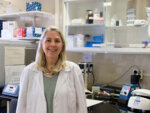
Julia García Prado, new IGTP Scientific Director

Dr. García Prado, leader of the Viral Immune Evasion and Vacciones (VIRIEVAC) at the IrsiCaixa AIDS Research Institute will combine the new position with the leadership of her group, focused on the design of new strategies against HIV. Manel Puig, General Director of the IGTP, has presented the new organizational chart during the presentation of the Research Agenda 2018, together with the new challenges for the coming years.

- Research

The IGTP leads the biological and pathological studies in an international clinical trial focused on child and adolescent liver tumours

It is the first and largest international clinical trial ever in this type of patients. IGTP researchers coordinate what is going to be a unique collection in Europe of biological samples for this segment of patients, and will lead the posterior studies. Liver cancer in children is classified as a rare diseases and, in Spain, 15 cases are diagnoses every year.

- Research

Germans Trias surgeons devise Rutilight® to improve illumination during operations.

The spin-off company Swan Medical SL, of which the IGTP is a shareholder, is responsible for production and distribution of the product, baptised Rutilight®, that can be adapted to all current surgical instruments to provide a spotlight on the operating area. The new device eliminates shadows in the operating area and illuminates places that are difficult to access. The tool has been invented by surgeons for surgeons

- Research

MacroH2A1.1 regulates mitochondrial respiration by limiting nuclear NAD+ consumption

A new paper published by researchers from the Josep Carreras Leukaemia Research Institute (IJC) and the Programme of Predictive and Personalized Medicine of Cancer, Germans Trias i Pujol Research Institute (PMPPC-IGTP) reveals a new role for macroH2A1.1. The project was spear-headed by Melanija Posavec Marjanovic and Sarah Hurtado-Bagès, two PhD students enrolled in the Pompeu Fabra University PhD program

- Research

A new way to diagnose hereditary cancers is already benefitting patients in the Catalan Health Service thanks to ground-breaking research by the Joint Program on Hereditary Cancer ICO-IDIBELL-IGTP

Researchers of the Joint Program on Hereditary Cancer ICO-IDIBELL-IGTP have designed and tested a new strategy based on next generation sequencing (NGS) for the genetic diagnostics of hereditary cancer. They tested it against other current commercially available NGS methods and the new method gave  better results. Previously patients were only tested for one or a small number of genes but now each patient can be tested for a wide range of genes in one single step and the results analysed using complex computing tools resulting in a much more efficient diagnostic process.  700 patients in the Catalan Health System have already benefitted from the new diagnostic approach