
About
The GCATlGenomes For Life group (GCAT lab) is a biomedical research group that leads the longitudinal and population cohort study of the genes of Catalonia: Genomes for Life. Cohort Study of the Genomes of Catalonia. This is a reference project in the field of genomics and molecular epidemiology, driven by the desire to transform scientific knowledge into a useful resource for public health and personalized medicine.
Launched over ten years ago, the project aims to advance the prediction, prevention, and personalised treatment of complex and chronic diseases such as diabetes, cardiovascular and respiratory pathologies or cancer. With a cohort of 20,000 volunteers from all over Catalonia, the GCAT lab has built a highly valuable scientific resource that integrates genetic, clinical, environmental, and lifestyle data.
Through its connection with public health records via the PADRIS programme, the project offers real-time follow-up of participants and a unique perspective on the transition from health to disease. This approach enables the study of how the interaction between the genome, the exposome, and other determinants influences disease risk and response to treatment.
The GCAT lab plays a cross-cutting and driving role in population molecular epidemiology research, making a significant contribution to the development of open science, biomedical innovation, and evidence-based health policies. Its transdisciplinary and collaborative model has fostered the establishment of partnerships with centres of excellence both nationally and internationally, as well as active participation in global research consortiums.
With a clear commitment to serving the scientific community, one of the strategic pillars of the GCAT lab is to provide FAIR data (Findable, Accessible, Interoperable, Reusable) and knowledge that can be transferred to clinical practice and society. The three main axes of the project - data generation, its availability and the translational application of knowledge - position the GCAT as a key scientific infrastructure within the health research and innovation system.
Keywords: genome, multiomics, exposome, cohort, digital health, non-communicable diseases, molecular epidemiology, FAIR data, international collaboration, open science
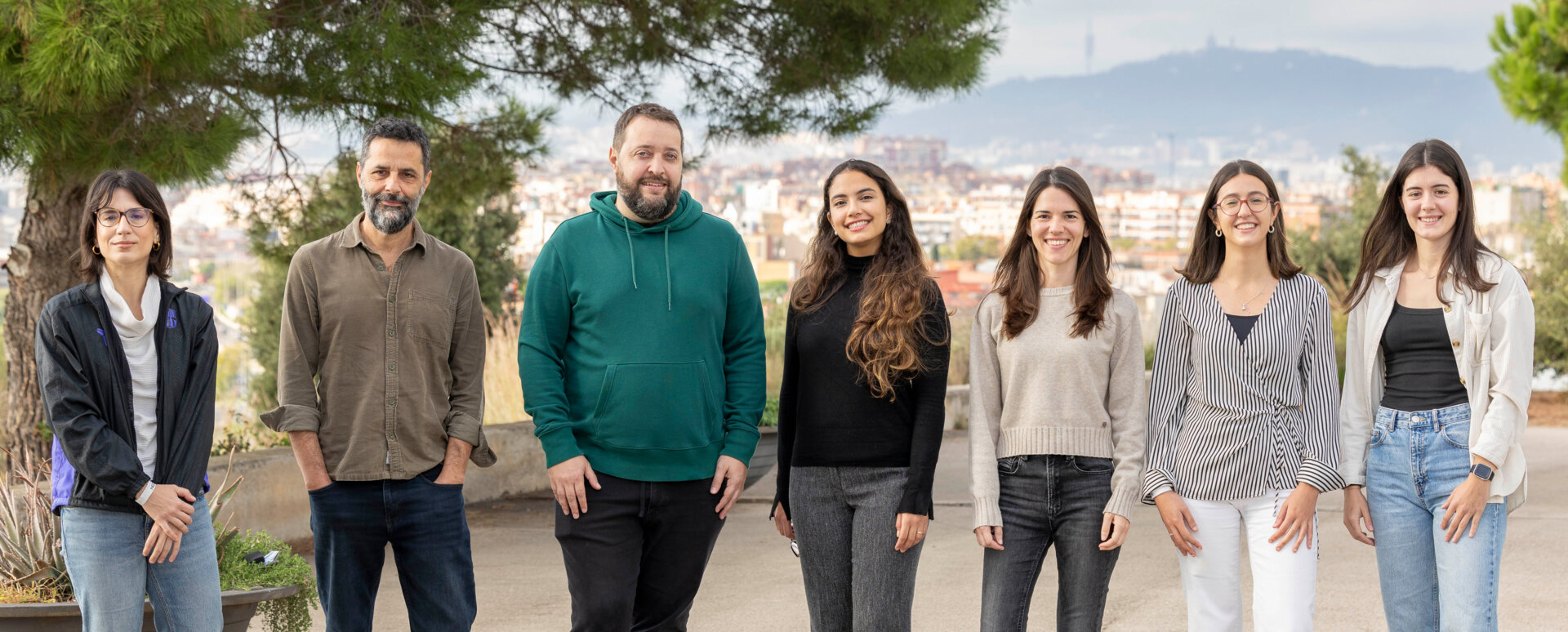
Group leader
- Rafael de Cid

Rafael de Cid
Dr Rafael de Cid is a biologist and PhD in genetics, with a solid track record in genomics, molecular epidemiology and multi-omic research applied to public health. He began his career in leading institutions such as the Centre for Genomic Regulation (CRG), the National Genotyping Centre (CNG, Paris), and Genethon (Paris), where he contributed to the first European projects in functional genomics. Since then, he has combined the study of the biological determinants of health with a population-based and translational approach, focusing on complex diseases.
Since 2012, Dr de Cid has led the GCAT cohort (Genomes for Life), initially at the Institute of Predictive and Personalized Cancer Medicine (IMPPC), and later at IGTP. GCAT has become one of the most important infrastructures for genomic research in Spain. With over 20,000 participants, it focuses on the study of genetic risk, environmental impact and precision medicine. The integration of clinical, omic and environmental data has enabled major advances in understanding cardiovascular diseases, diabetes, mental health, and more recently, COVID-19, through the COVICAT subcohort.
Dr de Cid has played a leading role in international projects such as EXPANSE, ENDVOC, ORCHESTRA, and other initiatives that have developed innovative approaches for analysing genetic variants and creating personalised risk models. He has promoted platforms like PheWeb-GCAT and PolyGenie to integrate genetic and clinical data in real time for informed healthcare decisions. These advances focus on combining exposome and genetic data to improve the prediction and prevention of chronic and infectious diseases.
With a strong commitment to open science and international collaboration, Dr de Cid has integrated GCAT into global networks such as ELIXIR-Spain, EHEN and EATRIS, and has driven initiatives like the DATOS-CAT project to enable secure sharing of private data. His work has been key to advancing personalised medicine, incorporating gender perspective and social context into disease analysis and the design of more inclusive and equitable health policies. With a future-oriented vision, Dr de Cid remains a reference in data integration to transform research into concrete clinical solutions.
Contact: rdecid(ELIMINAR)@igtp.cat
ORCID: 0000-0003-3579-6777
Team
Ramón y Cajal, Principal investigator
Sílvia Bonàs Guarch, PhD(ELIMINAR)
Laboratory Manager, Postdoctoral Researcher
Susana Iraola-Guzmán, PhD(ELIMINAR)
Data Analyst, Postdoctoral Researcher
Xavier Farré Ramón, PhD(ELIMINAR)
Natàlia Blay, PhD(ELIMINAR)
Project Manager
Rocío Estéfano(ELIMINAR)
PhD Student
Clara Gabaldon(ELIMINAR)
Master’s Student
Leticia Evaristo
Scientific Collaborators
Victor Moreno (GCAT-ICO-IDIBELL collaborator)
David Torrents (GCAT-BSC collaborator). Life Sciences - Computational Genomics, Barcelona Supercomputing Center (BSC-CNS), Joint BSC-CRG-IRB Research Program in Computational Biology, Barcelona
Manolis Kogevinas (GCAT-ISGLOBAL collaborator). Barcelona Institute for Global Health (ISGlobal Barcelona), Barcelona
Lauro Sumoy (GCAT-IGTP collaborator). High Content Genomics and Bioinformatics Unit, Program of Predictive and Personalized Medicine of Cancer (PMPPC), Germans Trias i Pujol Research Institute (IGTP), Badalona
Ignacio Blanco (GCAT-HUGTiP collaborator). Assessment and Clinical Genetics Program, HUGTiP, Badalona
Research lines
Multimorbidity
The team studies how chronic diseases such as diabetes, heart failure, stroke, and mental health disorders develop and interact over time. By combining clinical histories with multi-omic data, they aim to understand the mechanisms underlying multimorbidity and improve the prediction, prevention, and personalised management of complex health conditions.
COVID-19
This research area investigates the genetic, environmental, and social determinants of COVID-19 susceptibility, severity, and long-term effects. Using molecular epidemiology approaches and resources such as the GCAT_COVICAT subcohort, it also examines the pandemic's impact on mental health and working conditions.
Medical genomics and precision medicine for T2D
Researchers focus on understanding the molecular and environmental factors that influence the risk and progression of type 2 diabetes. By integrating genomic, multiomic, and exposure data into advanced predictive models, they seek to improve risk stratification, anticipate complications, and support personalised treatment strategies.
Environmental health
This work explores how environmental and social exposures throughout life shape health and disease risk. Using exposome-based approaches, the team assesses factors such as pollution, urbanisation, green spaces, noise, and socioeconomic conditions to generate evidence that can inform personalised medicine and public health policies.
Digital ecosystems for health research
The team develops digital infrastructures and analytical tools that enable the secure integration, sharing, and analysis of clinical, genomic, and environmental data. These resources support large-scale collaborative research and help accelerate the implementation of data-driven and personalised healthcare.
Active projects
END-VOC. ENDing COVID 19 Variants of Concern through cohort studies
PI: Rafael de Cid (IGTP) (partnership)
Funding agency: European Union Views
Agency code: PI/101046314
Start date: 2022
End date: 2025
Endvoc - Keeping tabs on SARS-CoV-2

Funded by the European Union Views and opinions expressed are however those of the author(s) only and do not necessarily reflect those of the European Union of European Health and Digital Executive Agency. Neither the European Union nor the granting authority can be held responsible for them.
Collaborative Cohorts Reassembled Data To Study Mechanisms And Longterm Incidence Of Chronic Diseases
PI: Jaume Marrugat (IMIM)
Funding agency: Instituto de Salud Carlos III (ISCIII)
Start date: 2023
End date: 2028
More information

CUPID "Crono-nutrición y enfermedades cardiometabólicas: una perspectiva epigenética"
PI: Camille Lassale (ISGlobal)
CoPI: Rafael de Cid (IGTP)
Agency: La Marató TV3
Start date: March 2024
End date: February 2027

GEPETO. Genome Profiling in the GCAT, an Electronic-Health-Record population-based cohort study to improve prevention, diagnosis and treatment of common diseases by using PRSs
PI Rafael de Cid (IGTP)
Funding agency: MCYT
Agency code TED2021-130626B-I00
Start date: 2023
End date: 2025

DATOS-CAT. Implementación y análisis de bases de datos en medicina de precisión
PI: Rafael de Cid (IGTP) (partnership)
Funding agency: Planes Complementarios, Instituto de Salud Carlos III (ISCIII)
Agency code: DATOS-CAT
Start date: 2023
End date: 2025


Past projects
IMPaCTT2D. ImpactT2D: una estrategia genómica para implementar medicina de precisión en la diabetes tipo 2
PI: Jorge Ferrer (CRG)
Funding agency: Instituto de Salud Carlos III (ISCIII)
Agency code: PMP21/00067
Start date: 2021
End date: 2024
COVICAT - CONTENT. Cohorte de COVID-19 en España: dinámica social, salud mental y desigualdades
PI: Manolis Kogevinas (ISGlobal), Rafael de Cid (IGTP)
Funding agency: "la Caixa" Social Research grant
Agency code: SR20-01024
Start date: 2020
End date: 2023
IA4T2d. Desarrollo e implementación de modelos integrados de inteligencia artificial para la predicción del riesgo de la Diabetes de Tipo 2
PI: Rafael de Cid (IGTP), David Torrents (BSC)
Funding agency: Planes Complementarios, Instituto de Salud Carlos III (ISCIII)
Agency code: B7251
Start date: 2023
End date: 2024
CaIMCO. Biomarcadors proteòmics cardiometabòlics i immunitaris de la Covid-19 per a l'avaluació clínica de la infecció, la gravetat de la malaltia i les complicacions postpandèmiques de salut
PI: Rafael de Cid (IGTP)
Funding agency: La Marató TV3
Agency code: 167/C/2021
Start date: 2022
End date: 2024
GeoINF+ project. Genetic study of the impact of gEographic environmental exposure on INFlamatory markers in the adult population
PI: Rafael de Cid (IGTP)
Funding agency: MCYT, ISCIII
Agency code: PI18/01512
Start date: 2019
End date: 2023
GeoInf+: Exposome Study. GCAT Health and Environment
Scientific publications
Highlighted publications
Blay N, Farré X, Garcia-Aymerich J, Castaño-Vinyals G, Kogevinas M, de Cid R. Pre-pandemic disease trajectories and genetic insights into long COVID susceptibility. BMC Med. 2025 Oct 27;23(1):590. DOI: 10.1186/s12916-025-04427-x.
Farré X, Blay N, Iraola-Guzmán S, Fernández-Jiménez F, Alzate-Piñol S, Llucià-Carol L, Espinosa A, Castaño-Vinyals G, Dobaño C, Moncunill G, Karachaliou M, Garcia-Aymerich J, Kogevinas M, Barceló C, Cadenas I, de Cid R. VEGFA sex-specific signature is associated to long COVID symptom persistence. BMC Med. 2025 Oct 10;23(1):552. DOI: 10.1186/s12916-025-04402-6.
Lammi V, Nakanishi T, Jones SE, Andrews SJ, Karjalainen J, Cortés B, O'Brien HE, Ochoa-Guzman A, Fulton-Howard BE, Broberg M, Haapaniemi HH, Kanai M, Pirinen M, Schmidt A, Mitchell RE, Mousas A, Mangino M, Huerta-Chagoya A, Sinnott-Armstrong N, Cirulli ET, Vaudel M, Kwong ASF, Maiti AK, Marttila MM, Posner DC, Rodriguez AA, Batini C, Minnai F, Dearman AR, Warmerdam CAR, Sequeros CB, Winkler TW, Jordan DM, Rešcenko R, Miano L, Lane JM, Chung RK, Guillen-Guio B, Leavy OC, Carvajal-Silva L, Aguilar-Valdés K, Frangione E, Guare L, Vergasova E, Marouli E, Striano P, Zainulabid UA, Kumar A, Ahmad HF, Edahiro R, Azekawa S; Long COVID Host Genetics Initiative; FinnGen; VA Million Veteran Program; MexGen-COVID Initiative; DBDS Genomic Consortium; GEN-COVID Multicenter Study; PHOSP-COVID Collaborative Group; GENCOV Study; Estonian Biobank Research Team; Luoh SW, Erikstrup C, Pedersen OBV, Lerner-Ellis J, Colombo A, Grzymski JJ, Ishii M, Okada Y, Beckmann ND, Kumari M, Wagner R, Heid IM, John C, Short PJ, Magnus P, Ansone L, Valenti LVC, Lee SA, Wain LV, Verdugo RA, Banasik K, Geller F, Franke LH, Rakitko A, Duncan EL, Renieri A, Tsilidis KK, de Cid R, Niavarani A, Abner E, Tusié-Luna T, Verma SS, Smith GD, Timpson NJ, Madduri RK, Cho K, Daly MJ, Ganna A, Schulte EC, Richards JB, Ludwig KU, Marks-Hultström M, Zeberg H, Ollila HM. Genome-wide association study of long COVID. Nat Genet. 2025 Jun;57(6):1402-1417. DOI: 10.1038/s41588-025-02100-w.
Kogevinas M, Karachaliou M, Espinosa A, Iraola-Guzmán S, Castaño-Vinyals G, Delgado-Ortiz L, Farré X, Blay N, Pearce N, Bosch de Basea M, Nogués EA, Dobaño C, Moncunill G, de Cid R, Garcia-Aymerich J. Risk, determinants, and persistence of long-COVID in a population-based cohort study in Catalonia. BMC Med. 2025 Mar 14;23(1):140. DOI: 10.1186/s12916-025-03974-7.
Carreras-Torres R, Galván-Femenía I, Farré X, Cortés B, Díez-Obrero V, Carreras A, Moratalla-Navarro F, Iraola-Guzmán S, Blay N, Obón-Santacana M, Moreno V, de Cid R. Multiomic integration analysis identifies atherogenic metabolites mediating between novel immune genes and cardiovascular risk. Genome Med. 2024 Oct 24;16(1):122. DOI: 10.1186/s13073-024-01397-2.
COMPASS Consortium; INVENT Consortium; Dutch Parelsnoer Initiative (PSI) Cerebrovascular Disease Study Group; Estonian Biobank; PRECISE4Q Consortium. Stroke genetics informs drug discovery and risk prediction across ancestries. Nature. 2022 Nov;611(7934):115-123. DOI: 10.1038/s41586-022-05165-3.
Valls-Margarit J, Galván-Femenía I, Matías-Sánchez D, Blay N, Puiggròs M, Carreras A, Salvoro C, Cortés B, Amela R, Farre X, Lerga-Jaso J, Puig M, Sánchez-Herrero JF, Moreno V, Perucho M, Sumoy L, Armengol L, Delaneau O, Cáceres M, de Cid R, Torrents D. GCATlPanel, a comprehensive structural variant haplotype map of the Iberian population from high-coverage whole-genome sequencing. Nucleic Acids Res. 2022 Mar 21;50(5):2464-2479. DOI: 10.1093/nar/gkac076.
Severe Covid-19 GWAS Group. Genomewide Association Study of Severe Covid-19 with Respiratory Failure. N Engl J Med. 2020 Oct 15;383(16):1522-1534. DOI: 10.1056/NEJMoa2020283.
Obón-Santacana M, Vilardell M, Carreras A, Duran X, Velasco J, Galván-Femenía I, Alonso T, Puig L, Sumoy L, Duell EJ, Perucho M, Moreno V, de Cid R. GCATlGenomes for life: a prospective cohort study of the genomes of Catalonia. BMJ Open. 2018 Mar 27;8(3):e018324. DOI: 10.1136/bmjopen-2017-018324.
Additional information
Collaborative networks
-
COVICAT: COVICAT is a collaborative, population-based initiative co-led with ISGlobal, launched in early 2020 to assess the impact of the COVID-19 pandemic on population health in Catalonia. It leverages the GCAT cohort infrastructure and integrates detailed data on infection, immunity, mental health, and socio-economic changes, with follow-ups in 2021 and 2023. GCAT plays a pivotal role by providing genomic and longitudinal clinical data to COVICAT, enabling molecular epidemiology studies of COVID-19. This subcohort enhances the ability to evaluate the long-term effects of the pandemic, particularly on mental health, quality of life, and sex-oriented perspectives
-
EXPANSE: EXPANSE is a large EU-funded project focused on advancing exposome research by integrating environmental, lifestyle, and omics data to study urban health impacts across Europe. GCAT contributes by providing environmental exposure data linked to individual health profiles and by participating in the Urban Labs Barcelona network, collaborating with five other European cities. This facilitates high-resolution modeling of how factors like air pollution, urban design, green space access, and noise influence cardiometabolic and respiratory health outcomes.
-
ENDVOC: ENDVOC (Ending COVID-19 Variants of Concern) is a global EU-funded initiative dedicated to tracking, characterizing, and responding to SARS-CoV-2 variants. The project integrates genomic surveillance, epidemiology, and clinical data from populations worldwide. Through its involvement in ENDVOC, GCAT provides valuable population-based data and variant monitoring capabilities. This collaboration enhances the detection of emerging SARS-CoV-2 mutations and strengthens the assessment of long-term consequences of COVID-19 variants across diverse demographic groups, integrating insights from COVICAT.
-
ELIXIR: ELIXIR is a European infrastructure that connects national bioinformatics resources to support the storage, sharing, and analysis of large-scale biomedical data. The platform focuses on data interoperability, standardization, and ensuring long-term sustainability. As part of ELIXIR-Spain, GCAT contributes by harmonizing its data with the FAIR (Findable, Accessible, Interoperable, and Reusable) principles. GCAT supports interoperability through tools such as MICA and DataSHIELD, enabling secure access and federated analysis, in line with ELIXIR's goal of facilitating responsible data sharing across international borders.
-
CORDELIA: CORDELIA aims to advance understanding of cardiovascular diseases by studying the impact of lifestyle, genetic, molecular, and environmental factors. Its goal is to identify effective strategies for predicting and preventing risks, ultimately reducing the societal burden of these diseases through tailored prevention and treatment. CORDELIA also focuses on training new researchers in this field. GCAT joined CORDELIA in 2024, contributing its 20,000-participant cohort with rich, homogeneous data. This collaboration strengthens CORDELIA's research, supporting high-quality, multiparametric studies. The network also enhances European research, driving innovative cardiovascular solutions in partnership with pharma, tech, and industry.
Newsletters
Stay up to date and get involved in the topics that matter most to you. The GCAT Newsletter offers information about the latest news, events, and updates from the project.
Tools
ENDVOC's Fourth General Assembly in London Shows Great Progress
Doctoral theses
Title: Genetic determinants of disease trajectories and multimorbid clusters in the adulthood. A Population based cohort analysis
Author: Natalia Blay Magriña
Supervisor: Rafael de Cid
University: Universitat de Barcelona
Date of defence: end of 2025
Outreach
EATRIS Workshop on Patient Engagement - 28 October 2024
GCAT actively participated in the workshop organized by EATRIS and IGTP, forming part of the panel on Community Engagement. Experience was shared in population cohorts and citizen participation strategies in biomedical research.
World Diabetes Day – Special interview
On the occasion of World Diabetes Day, an interview was published with three experts affiliated with GCAT specialising in type 2 diabetes. The value of the cohort in better understanding the genomic and population factors of this complex disease was highlighted.
6th Celebration of the International Day of Women and Girls in Science
GCAT participated in various initiatives to raise the visibility of women in research, such as the Women and Leadership in Science forum, collaborating in the organisation of events and activities at local and European levels. This effort reinforces the commitment to equality and scientific diversity.
Mobile World Congress (MWC) 2025 - Forum Arena, 5 March 2025
GCAT had an institutional presence at MWC 2025 within the framework of digital health and the secondary use of data. It participated in sessions focused on data interoperability and the development of digital cohorts, highlighting its technological and collaborative contributions in the biomedical field.
News
Air pollution and temperature variability are associated with higher blood glucose levels
A European study involving GCAT-IGTP has identified an association between greater exposure to air pollution, particularly PM10 particles, greater temperature variability and higher blood glucose levels in people without diabetes. The findings highlight the importance of studying environmental factors together and improving air quality in the context of climate change.
Night shift work linked to a higher risk of long COVID
The first evidence that night work and chronic insomnia may increase the risk of developing long COVID comes from a new study led by ISGlobal, a centre supported by "la Caixa" Foundation, in collaboration with the Germans Trias i Pujol Research Institute (IGTP), through the GCATlGenomes for Life cohort.
Data search
Researchers can access a variety of GCAT resources with different levels of data access. Summary statistics are available directly, while more sensitive individual-level genomic or clinical data require formal registration and approval.
Several tools are provided for exploratory analysis, enabling interactive data exploration and visualization:
- GCAT GitHub Repository: up-to-date code, pipelines, and scripts for genomic data analysis.
- MICA-GCAT: standardizes and manages omics, clinical, and epidemiological data.
- PheWEB-GCAT: visualizes GWAS results interactively.
- PolyGenie-GCAT: computes and visualizes polygenic risk scores across multiple traits.
- EGA-GCAT Data Access: secure access to individual-level datasets stored at the European Genome-Phenome Archive.
These resources allow researchers to explore data, generate hypotheses, and perform analyses while ensuring ethical compliance and responsible data use.
GCAT Data Access
The GCAT project provides access to extensive genomic, epigenomic, and proteomic datasets, including genome-wide association study (GWAS) results, following FAIR principles to ensure data are Findable, Accessible, Interoperable, and Reusable. These datasets are securely archived at the European Genome-Phenome Archive (EGA).
Summary statistics from GWAS and related analyses are publicly available only upon request.
Individual-level data, including raw genomic, epigenomic, and proteomic measurements, are available upon request and require formal approval due to data sensitivity and privacy concerns.
Access to individual-level data requires compliance with strict data use agreements and ethical guidelines. Researchers are encouraged to promote open science while ensuring responsible data handling.
MICA-GCAT
MICA is a key tool for the standardization and management of data from the GCAT cohort. It facilitates the collection, organization, and integration of omics, clinical, and epidemiological data in a structured and coherent way.
Within GCAT lab, MICA ensures that data are harmonized according to international standards, enabling better interoperability and data reuse. This aligns closely with GCAT's commitment to the FAIR principles (Findable, Accessible, Interoperable, and Reusable), which aim to make data easy to locate, access, integrate, and reuse across different studies.
Moreover, MICA supports GCAT's Open Science policy by promoting transparency and data sharing, fostering collaborative research and accelerating scientific discovery. Thanks to MICA, GCAT manages cohort data efficiently and openly, enhancing the quality and impact of genomic research.
https://coral.igtp.cat/pub/study/gcat
PheWEB-GCAT
PheWEB is a user-friendly tool designed to visualize GWAS (Genome-Wide Association Studies) data from the GCAT cohort. It offers an intuitive and interactive way to explore genetic associations related to various diseases and traits present in the cohort.
By providing easy access to these visualizations, PheWEB supports the FAIR principles (Findable, Accessible, Interoperable, and Reusable) by making complex GWAS results understandable and widely accessible to researchers. This openness aligns with GCAT's Open Science policy, encouraging transparency, data sharing, and collaborative discovery.
With PheWEB, scientists can quickly identify genetic patterns and generate new hypotheses, accelerating research into the genetic basis of diseases
PolyGenie-GCAT
PolyGenie is a web-based interactive platform for computing and visualizing phenome-wide associations across multiple molecular and clinical layers using polygenic risk scores (PRS). Applied to a large-scale dataset of ~5,000 individuals from the GCAT cohort, PolyGenie currently integrates over 100 trait-specific PRS with a wide range of outcomes, including diseases, metabolite levels, lifestyle factors, and environmental exposures.
The platform enables interactive exploration through PheWAS-style plots and prevalence trends across PRS percentiles, helping researchers interpret pleiotropy and genetic correlations more effectively. By making these analyses accessible and user-friendly, PolyGenie promotes the FAIR principles (Findable, Accessible, Interoperable, and Reusable) and supports GCAT's Open Science policy, encouraging transparency, data sharing, and collaborative research.
Thanks to PolyGenie, scientists can uncover complex genetic relationships and advance our understanding of disease risk in an open and reproducible way.
In the near future, the platform will be extended to include data from ~20,000 individuals. Access to this expanded version will be available upon registration, allowing us to ensure responsible use while maintaining the platform's commitment to open science.
Access to GCAT Summary Statistics
GCATlab provides open access to summary statistics from genome-wide association studies (GWAS) conducted on the GCAT cohort. These aggregated datasets include variant-level association metrics for multiple traits and diseases studied across thousands of individuals.
The summary statistics are openly shared to promote transparency, reproducibility, and collaborative science. They are formatted according to community standards to ensure interoperability with downstream tools and analyses.
This resource reflects GCAT's commitment to the FAIR principles (Findable, Accessible, Interoperable, and Reusable) and the broader goals of Open Science. By making these data available, GCAT empowers researchers to perform meta-analyses, benchmark models, and generate new hypotheses with ease and rigor.
Accessible summary statistics include those from studies such as:
- "Multiomic integration analysis identifies atherogenic metabolites mediating between novel immune genes and cardiovascular risk"
- "Skin Phototype and Disease. A Comprehensive Genetic Approach to Pigmentary Traits Pleiotropy using PRS in the GCAT Cohort"
http://www.gcatbiobank.org/access-results/
EGA-GCAT Data Access
The GCAT cohort has contributed a wide range of omics and clinical datasets to the European Genome-Phenome Archive (EGA), under the accession code EGAS00001003018. This includes whole-genome sequencing, genotyping, disease diagnoses, environmental exposures, and targeted sequencing linked to severe COVID-19 outcomes, based on data from over 20,000 participants.
A total of 14 datasets are available, supporting research across multiple domains such as genomics, epidemiology, and systems biology. Genomic data include over 5,000 genotyping profiles using the MEGAEX array and high-coverage WGS data from 808 individuals. Detailed phenotypic information is derived from electronic health records and structured metadata.
These datasets are fully aligned with the FAIR principles (Findable, Accessible, Interoperable, and Reusable) and reflect GCAT's strong commitment to Open Science, ensuring transparency, responsible data sharing, and collaborative research. Researchers can request access through the EGA platform to explore genetic variants, environmental interactions, and health outcomes in a large, well-characterized Mediterranean cohort.
https://ega-archive.org/studies/EGAS00001003018
GCAT GitHub Repository
The GCAT GitHub repository hosts up-to-date code, pipelines, and scripts for genomic data analysis. It plays a central role in standardizing and automating research workflows, ensuring reproducibility and transparency.
By openly sharing these resources, GCATlab aligns with the FAIR principles (Findable, Accessible, Interoperable, and Reusable), making code and analytical methods easy to find and use by the scientific community. This openness supports GCAT's strong commitment to Open Science, promoting collaboration and accelerating discoveries.
Through the GitHub platform, researchers have easy access to the latest tools and can contribute to continuous improvements, fostering an inclusive and dynamic research environment.
Contact
Rafael de Cid
930330542 (6200)
More links
GCAT website · List of projects · Follow @GCATcohort on X/Twitter · Follow @GCAT - Genomes for life on LinkedIn · Follow @gcatcohort.bsky.social on Bluesky