Escoles Sentinella 2024–2025 Report published: five years of participatory research consolidating an innovative model between public health and education
The Escoles Sentinella project concluded in 2025 with key scientific evidence on school health and a strong legacy for future public policies
On 15 December, the Escoles Sentinella 2024-2025 Report was published, presenting the main results of the fifth and final academic year of the Escoles Sentinella project. After five consecutive school years, the project has shown that the network structure created during the COVID-19 pandemic is viable and beneficial beyond SARS-CoV-2, generates relevant scientific evidence on school health, and does so through collaboration between the educational community, the research team and public institutions.
Coordinated by the Centre for Epidemiological Studies on HIV/AIDS and STI of Catalonia (CEEISCAT) -a research group at the Germans Trias i Pujol Research Institute (IGTP)- the project involved the participation of Vall d'Hebron University Hospital, IDIAPJGol, the IrsiCaixa Health Living Lab and ISGlobal. It was promoted by the Catalan Department of Health in collaboration with the Department of Education and Vocational Training. Over five academic years, 52 educational centres across Catalonia worked together to generate useful knowledge and inform public health policies.
Main conclusions of the 2024-2025 Report
The report focuses on the results from the final academic year among students aged 11 to 19 and consolidates trends observed throughout the project:
- Emotional wellbeing: indicators continue to show poorer outcomes among girls than boys (35.5% vs 18.8% reporting emotional distress, respectively), a difference that has remained consistent over the five years.
- Sexual and reproductive health: half of the students who reported penetrative sexual intercourse in the past year do not use condoms consistently; one third do not use contraception or use ineffective methods. More than one third were unaware of what STIs are prior to the study.
- Sexual violence: 30.5% have experienced it at some point in their lives and 23.0% in the past year; prevalence is three times higher among girls.
- Pornography consumption: particularly frequent among boys (weekly use: 21.5% vs 2.2% among girls), with an average age of first exposure of around 12 years.
- Substance use: alcohol is the most commonly used substance (42.3% have tried it; 11.1% show risky consumption). A total of 14.9% have tried tobacco and 24.3% electronic cigarettes.
- Interest in science: low levels of interest among students and limited use of the scientific method in the classroom are observed.
- Participatory research and a systemic approach: these are viable and transformative, fostering innovation and student autonomy; however, challenges remain in achieving high participation from external stakeholders (families and other professionals).
- Hand hygiene: although students already show high levels of correct handwashing, the intervention using luminescence and digital tools has achieved significant improvements and greater efficiency in monitoring.
Project closure (2025)
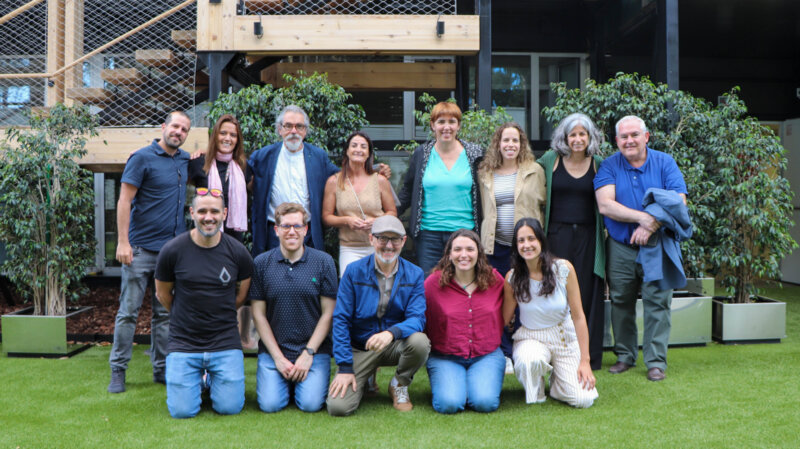
The Escoles Sentinella project concluded in 2025. The closing event was held at the Germans Trias i Pujol Research Institute, where lessons learned were shared and five years of joint work were acknowledged. Born during the pandemic to understand COVID-19 in classrooms, the project has gone much further: it has placed mental health at the centre, studied other respiratory and gastrointestinal infections, promoted affective and sexual education, and fostered safer and healthier school environments.
Despite its conclusion, the legacy is strong: the Escoles Sentinella model and its participatory research approach are consolidated as a useful tool for future public health policies based on epidemiological surveillance and co-creation with the educational community.