
About
The Childhood Liver Oncology Group (c-LOG), is a pioneering translational research team dedicated to improving survival rates and quality of life for children diagnosed with liver cancer, with a primary focus on hepatoblastoma but also in hepatocellular carcinoma in children, both rare cancers. While liver cancer in children generally has a good prognosis, survival is poor for patients with aggressive and chemo resistant tumours. Furthermore, survivors often suffer lifelong secondary effects due to high doses of chemotherapy. Due to the rarity of these diseases (approximately one case per million), they have made significant efforts to collect samples from affected infants and children as the foundation of its research. The team addresses the challenge of understanding the underlying causes of these diseases to develop improved treatment strategies and risk stratification algorithms aimed at increasing patient survival and minimizing chemotherapy-related side effects.
To accomplish these objectives, they established the Childhood Liver Cancer Network Collection (CLCN), a comprehensive European biorepository of biological samples from paediatric liver cancer patients. This resource was developed in collaboration with the Paediatric Hepatic International Tumour Trial (PHITT) and through partnerships with hospitals across Europe. Additionally, they collaborate with the Gastroenterology Department at Germans Trias i Pujol University Hospital to collect biological specimens from adult patients with liver diseases, facilitating a broader understanding of liver cancer, including its adult form, hepatocellular carcinoma.
Research efforts focus on several key areas:
- Consolidating a unique European biorepository that serves as a vital resource for current and future translational research.
- Investigating the molecular biology of childhood liver cancer to identify biomarkers and therapeutic targets, particularly for tumours resistant to current therapies.
- Discovering and validating diagnostic and prognostic biomarkers to enhance clinical risk stratification and improve patient management within the context of the PHITT trial, with the aim of applying these findings in future clinical trials.
- Advancing precision medicine by employing patient-derived models, such as xenografts and organoids, to test innovative, individualized therapies tailored to specific tumour subtypes.
The group faces challenges common to rare paediatric cancers, including limited patient numbers and the complexity of translating molecular findings into effective treatments. Nevertheless, their integrative approach -combining clinical collaboration, advanced technologies, and international cooperation- positions it to make significant contributions toward more effective, less toxic therapies, ultimately improving outcomes for children with liver cancer.
Keywords: oncology, cancer, liver cancer, childhood liver cancer, hepatoblastoma.
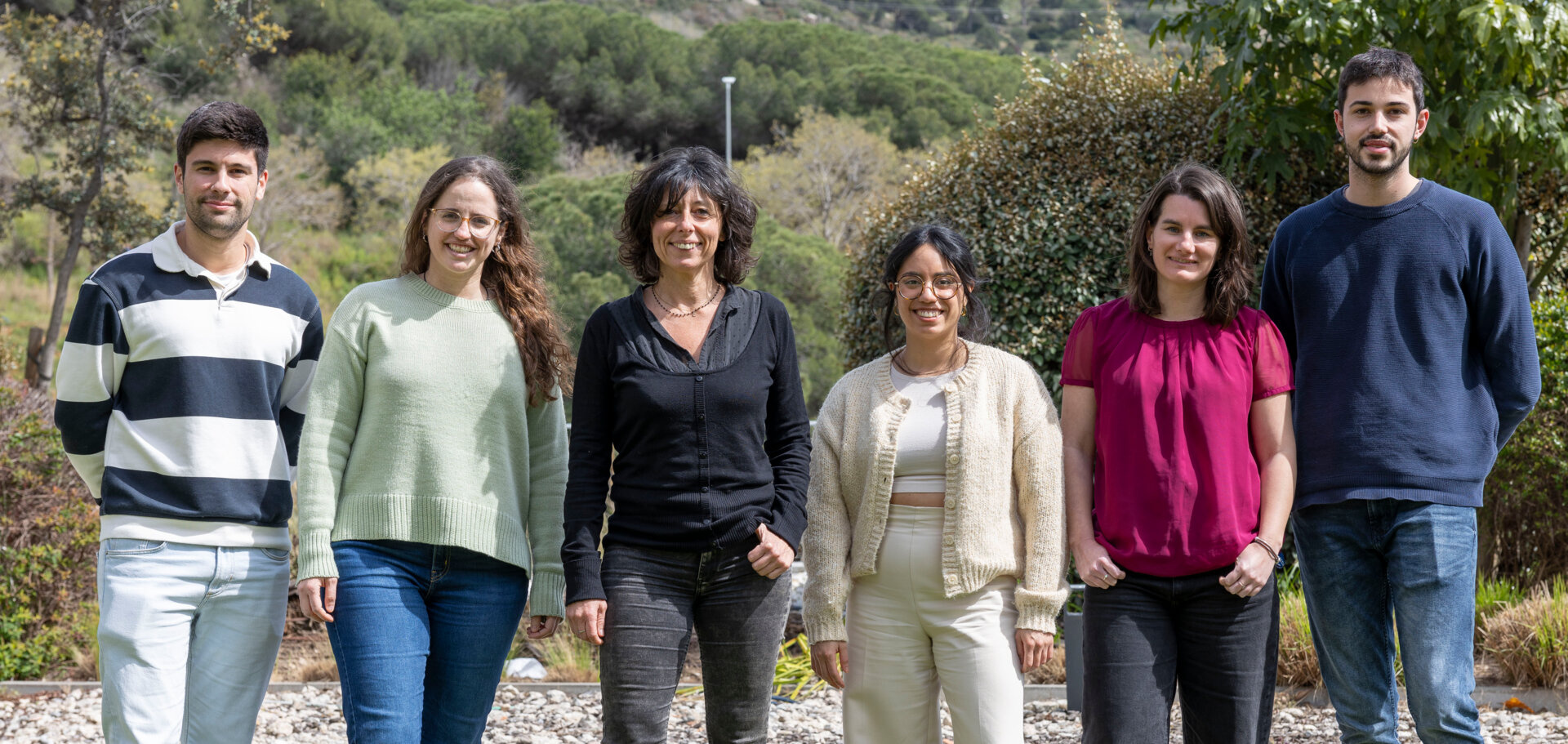
Group leader
- Carolina Armengol Niell

Carolina Armengol Niell
Carolina Armengol Niell has over 28 years of experience in translational liver cancer research, focusing on both paediatric and adult patients. She holds degrees in Biology (1996) and Biochemistry (1998), a PhD in Biochemistry conducted at the Hospital Clínic and Faculty of Medicine of the University of Barcelona (2004), and completed a postdoctoral fellowship at the Institut Pasteur in Paris (2004-2007). Supported by a Ramón y Cajal contract (Ministry of Economic Affairs and Digital Transformation), she founded the Childhood Liver Oncology Group (c-LOG) at IGTP in 2010, which is affiliated with CIBERehd as part of the CB06/04/0033 group, where she also serves as the leader.
Dr Armengol has been a pioneer in translational research on childhood liver cancer in Spain, and her research group is internationally recognised as a reference group in the field. She currently serves as chair of the biology and pathology committee for the International Childhood Liver Tumour Strategy Group (SIOPEL). Her research focuses on directly studying patient samples to better understand the disease and translate findings into clinical practice, with the ultimate goal of improving patients' quality of life.
Dr Armengol's work is supported by competitive funding from national and international agencies. She currently leads two coordinated projects at the national and EU levels. She has published extensively in high-impact journals and actively collaborates with industry partners to develop diagnostic devices and novel therapeutic approaches for aggressive liver tumours.
Contact: carmengol(ELIMINAR)@igtp.cat
ORCID: 0000-0002-4690-4027
Team
Postdoctoral fellow
Manuela Barranco Piazza(ELIMINAR)
PhD students
Andrea Castaneda Moreno(ELIMINAR)
PhD student; Medical hepatologist
Maria Torner Simó(ELIMINAR)
Medical hepatologist
Margarita Sala Llinàs(ELIMINAR)
Laboratory technician
Lucia Lozano White(ELIMINAR)
Junior researcher
Queralt Miñarro(ELIMINAR)
Master's thesis student
Jan Saracibar
Bachelor's thesis student
Miquel Roca
Research lines
Establishing a unique European biorepository for childhood liver cancer
They are building a robust network of collaborations with hospitals across Europe to collect biological samples from paediatric patients with liver cancer. This initiative is made possible through the invaluable support of families, paediatric oncologists, surgeons, and pathologists, creating a unique resource for advancing research and treatment.
Unravelling the molecular biology of childhood liver cancer
Their research focuses on deepening the understanding of rare and highly aggressive forms of childhood liver cancer, particularly those resistant to current therapies. Using cutting-edge high-throughput technologies and advanced computational approaches, the group aims to identify critical biomarkers and therapeutic targets to enable the development of more effective treatments.
Diagnostic and prognostic biomarker discovery to enhance patient outcomes
They are committed to identifying and validating diagnostic and prognostic biomarkers using samples from European patients enrolled in the pioneering Paediatric Hepatic International Tumour Trial (PHITT). These efforts are designed to refine clinical risk stratification and improve the management and quality of life of children with liver cancer.
Advancing precision medicine in childhood liver cancer
The group is at the forefront of testing innovative therapies tailored to individual patients. By leveraging advanced patient-derived models, such as xenografts and organoids, they aim to identify therapeutic targets and the most effective drugs for each tumour subtype, paving the way for precision medicine in paediatric liver cancer.
Active projects
Tumour-host interactions in liver cancer of childhood and adults (THRIVE)
PI: Josep M. Llovet; Partner: Carolina Armengol
Funding Agency: European Health and Digital Executive Agency (HaDEA), European Commission
Duration: 01/12/2023 – 30/11/2028
More information

Hub d'innovació pediàtrica - I4KIDS
PI: St Joan de Déu; Collaborator: Carolina Armengol
Funding agency: Agència de Gestió d'Ajuts Universitaris i de Recerca (AGAUR)
Agency code: 2021-XARDI-00006
Duration: 2023 – 2026

Precision medicine for hepatoblastoma: identification of novel therapies and predictive biomarkers using a unique EU biorepository (PMed4HB)
PI: Carolina Armengol
Funding agency: Spanish Association Against Cancer
Agency code: PRYCO223102ARME
Duration: 01/12/2022 - 30/11/2027
More information


Dissecting the role of the 14q32 region in hepatoblastoma (Hblast14)
PI: P Sancho-Bru; Partner: Carolina Armengol
Funding Agency: Worldwide Cancer Research
Duration: 01/04/2023 - 31/03/2026
Past projects
Translational research group in hepatic pathology and innate immunity
Funding agency: Agència de Gestió d'Ajuts Universitaris i de Recerca (AGAUR)
Agency code: 2021-SGR-01186
Robust Learning and Reasoning for Complex Event Forecasting (EVENFLOW)
PI: NCSR; Third party: Carolina Armengol
Funding Agency: European Commission, Horizon Europe
Duration: 01/10/2022 - 30/09/2025
Individualized Pediatric Cure, iPC
Funding agency: H2020 Grant Agreement
Agency code: 826121
Duration: 2019 - 2023
Proteomic profiling of tumors from poor-prognosis childhood liver cancer patients
Recipient: Álvaro del Rio Alvarez
Funding agency: FI-AGAUR
Agency code: 2021FI_B 00528
Duration: 01/04/2022 - 31/03/2025
Identification of predictive Biomarkers and novel biology-driven Therapies for Childhood Liver Cancer patients using a unique EU biorepository (BT4ChildLC)
PI: Carolina Armengol
Funding agency: Fight Kids Cancer Program, European Science Foundation
Duration: 2023 - 2025
Targeting choline metabolism in high-risk hepatoblastoma with a novel release-controlled drug
PI: Carolina Armengol
Funding agency: AGAUR (LLAVOR program)
Agency code: ChilD (2024 LLAV 00109)
Duration: 2024 - 2025
Identificación de dianas moleculares para terapias innovadoras del hepatoblastoma
PI: Carolina Armengol
Funding agency: Center for Biomedical Network Research (CIBER)
Duration: 01/04/2022-31/3/2024
Scientific publications
Highlighted publications
Balaseviciute U, Huguet-Pradell J, Abril-Fornaguera J, Gris-Oliver A, Rialdi A, Fernández-Martínez E, Montironi C, Del Pozo V, Houghton P, Zanatto L, Mesropian A, Keraite I, Thung S, Armengol C, Sancho-Bru P, Guccione E, Pinyol R, Llovet JM. Effective therapeutic targeting of CTNNB1-mutant hepatoblastoma with WNTinib. Mol Oncol. 2026 Apr;20(4):920-932. doi: 10.1002/1878-0261.70168.
Zapata-Pavas LE, Serrano-Macia M, Merlos Rodrigo MÁ, Barrenechea-Barrenechea JA, Peña-SanFelix P, Del Río-Álvarez Á, Gil-Pitarch C, Rejano-Gordillo CM, Goikoetxea-Usandizaga N, González-Recio I, Michalkova H, Mercado-Gómez M, Lachiondo-Ortega S, Castañeda A, Asensio M, Murti A, Lelou E, Nogueiras R, Mayor U, Heger Z, Sancho-Bru P, Delgado TC, Calvisi DF, Xirodimas DP, Wang B, Marin JJG, Fernandez-Barrena MG, Armengol C, Ávila M, Martínez-Chantar ML. NEDD8-specific protease 1 deficiency as a novel driver of hepatoblastoma development through dysregulation of the CAND1-NEDD8 pathway. Hepatology. 2025 Nov 14. doi: 10.1097/HEP.0000000000001614.
Ravoni A, Mastrostefano E, Kappler R, Armengol C, Castiglione F, Nardini C. Mimicking cancer therapy in an agent-based model: The case of hepatoblastoma. Comput Methods Programs Biomed. 2025 Sep;269:108917. doi: 10.1016/j.cmpb.2025.108917.
Cai Z, Boys EL, Noor Z, Aref AT, Xavier D, Lucas N, Williams SG, Koh JMS, Poulos RC, Wu Y, Dausmann M, MacKenzie KL, Aguilar-Mahecha A, Armengol C, Barranco MM, Basik M, Bowman ED, Clifton-Bligh R, Connolly EA, Cooper WA, Dalal B, DeFazio A, Filipits M, Flynn PJ, Graham JD, George J, Gill AJ, Gnant M, Habib R, Harris CC, Harvey K, Horvath LG, Jackson C, Kohonen-Corish MRJ, Lim E, Liu JJ, Long GV, Lord RV, Mann GJ, McCaughan GW, Morgan L, Murphy L, Nagabushan S, Nagrial A, Navinés J, Panizza BJ, Samra JS, Scolyer RA, Souglakos J, Swarbrick A, Thomas D, Balleine RL, Hains PG, Robinson PJ, Zhong Q, Reddel RR. Federated Deep Learning Enables Cancer Subtyping by Proteomics. Cancer Discov. 2025 Sep 4;15(9):1803-1818. doi: 10.1158/2159-8290.CD-24-1488.
Xie T, Sorenson JC, Spector LG, Pankratz N, Huang RS, Hiyama E, Poynter JN, Tomlinson GE, Armengol C, Kappler R, Scheurer ME, Roman E, Castellano A, Grotzer MA, Ziegler DS, Basu S, Marcotte EL, Yang T. Multiancestry Transcriptome-Wide Association Study Identifies Candidate Genes Associated with Hepatoblastoma. Cancer Epidemiol Biomarkers Prev. 2025 Aug 1;34(8):1405-1414. doi: 10.1158/1055-9965.EPI-24-1553.
Cives-Losada C, Asensio M, Briz O, Chinchilla-Tábora LM, Barranco MM, Río-Álvarez ÁD, Martinez-Chantar ML, Avila MA, Cairo S, Armengol C, Marin JJG, Macias RIR. Relevance of transportome among the mechanisms of chemoresistance in hepatoblastoma. Biochem Pharmacol. 2025 Jul;237:116914. doi: 10.1016/j.bcp.2025.116914.
Fonseca KL, Lozano JJ, Despuig A, Habgood-Coote D, Sidorova J, Aznar D, Arias L, Del Río-Álvarez Á, Carrillo-Reixach J, Goff A, Wildner LM, Gogishvili S, Nikolaishvili K, Shubladze N, Avaliani Z, Tapia G, Rodríguez-Martínez P, Cardona PJ, Martinón-Torres F, Salas A, Gómez-Carballa A, Armengol C, Waddell SJ, Kaforou M, O'Garra A, Vashakidze S, Vilaplana C. Unravelling the transcriptome of the human tuberculosis lesion and its clinical implications. Nat Commun. 2025 May 30;16(1):5028. doi: 10.1038/s41467-025-60255-w.
Additional information
Collaborative networks
- CIBEREHD: The Network Center for Biomedical Research in Hepatic and Digestive Diseases is a consortium with its own legal personality, with no physical contiguity, which aims to promote and cooperate in scientific research, development of knowledge and transferring this to society, in the area of liver and digestive diseases. C. Armengol is leading a multidisciplinary research group distinguished by its clinical, translational, and experimental investigations on various liver diseases: (i) Chronic hepatitis, non-alcoholic fatty liver disease, cirrhosis, and its complications; (ii) Liver cancer: Hepatocellular carcinoma and hepatoblastoma and (iii) Innate immunity in liver disease. More information
- SIOPEL: The International Society of Paediatric Oncology Epithelial Liver Tumours Group. The Association is founded to pursue the following objectives with respect to childhood liver tumours: (i) To develop and conduct comprehensive clinical research programs, (ii) To promote basic and translational research; (iii) To promote worldwide cooperation with cooperative groups that share similar interests; (iv) To develop pre-clinical models to run translational research on rare tumours; (v) To promote scientific and educational events in this field; (vi) To undertake other educational activities in this field.
The SIOPEL website is currently under construction.
C. Armengol is a member of the interim SIOPEL Board and is currently serving as the co-chair of the Biology and Pathology committee.

Theses
Doctoral theses
Title: Biomarker Discovery and Validation Through Clinically Applicable Techniques: Advancing Personalized Medicine in Pediatric Liver Cancer
Author: Álvaro del Río Álvarez
Supervisor: Carolina Armengol Niell
University: Universitat de Barcelona
Date of defence: 2025-2026
Title: Towards precision medicine in pediatric liver cancer: discovery and validation of prognostic biomarkers
Author: Juan Carrillo Reixach
Supervisors: Carolina Armengol Niell i Carlos Julian Ciudad Gomez
University: Universitat de Barcelona
Date of defence: 19/12/2022
Master’s and Bachelor’s theses
Master's thesis - "Study of diagnostic biomarkers in childhood liver cancer". Jan Saracibar Mas. Cancer Research Master's Program, Universitat de Barcelona. 2025-2026.
Bachelor's thesis - "Comprehensive analysis of a unique European clinical, pathological and molecular database to identify prognostic biomarkers in childhood liver cancer". Miquel Roca Solé. Degree in Data Science and Engineering, Universitat Politècnica de Catalunya. 2026.
Outreach
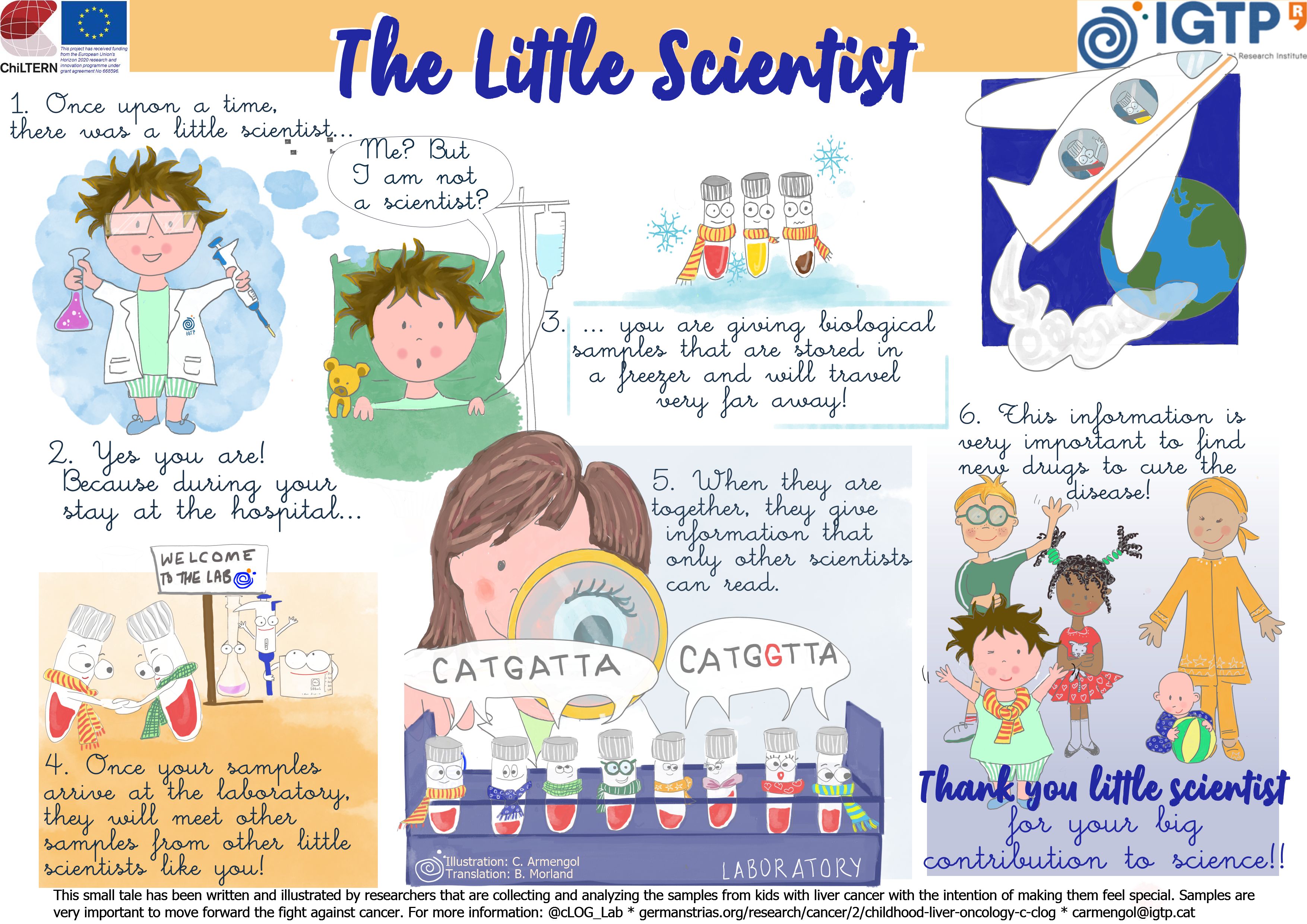
"The Little Scientist" is a small tale written and illustrated to learn about the important role of children with liver cancer in c-LOG's research. It is meant for families and patients with liver cancer. Translations into Spanish, Catalan, French and Polish are on their way!
In case you are interested in the dissemination activites of the c-LOG team including meetings with families of children with liver cancer and parent's associations, please contact us!
News
19 IGTP researchers, recognised in a scientific impact ranking
A total of 19 women researchers affiliated with the Germans Trias i Pujol Research Institute (IGTP) feature in the April 2026 edition of the Ranking of Spanish Women Researchers and Women Researchers in Spain, reflectig the relevance of the research conducted both at the institute and across the Can Ruti Campus.
European project BT4ChildLC advances precision medicine for childhood liver cancer
The European project BT4ChildLC, led by IGTP, has advanced precision medicine for childhood liver cancer by combining large-scale biological data with innovative preclinical models to identify new biomarkers and therapeutic strategies. The results provide a strong foundation for future international studies and highlight the importance of collaboration in advancing research into rare paediatric cancers.
Contact
(+34) 93 554 30 72
More links
Follow @cLOG_Lab on X · Donate via Amics de Can Ruti · PMed4HB project website · Follow c-LOG on LinkedIn · Follow @THRIVE_LiverCan on X