
A rare case of Parkinson's disease reveals molecular changes in platelets during disease progression
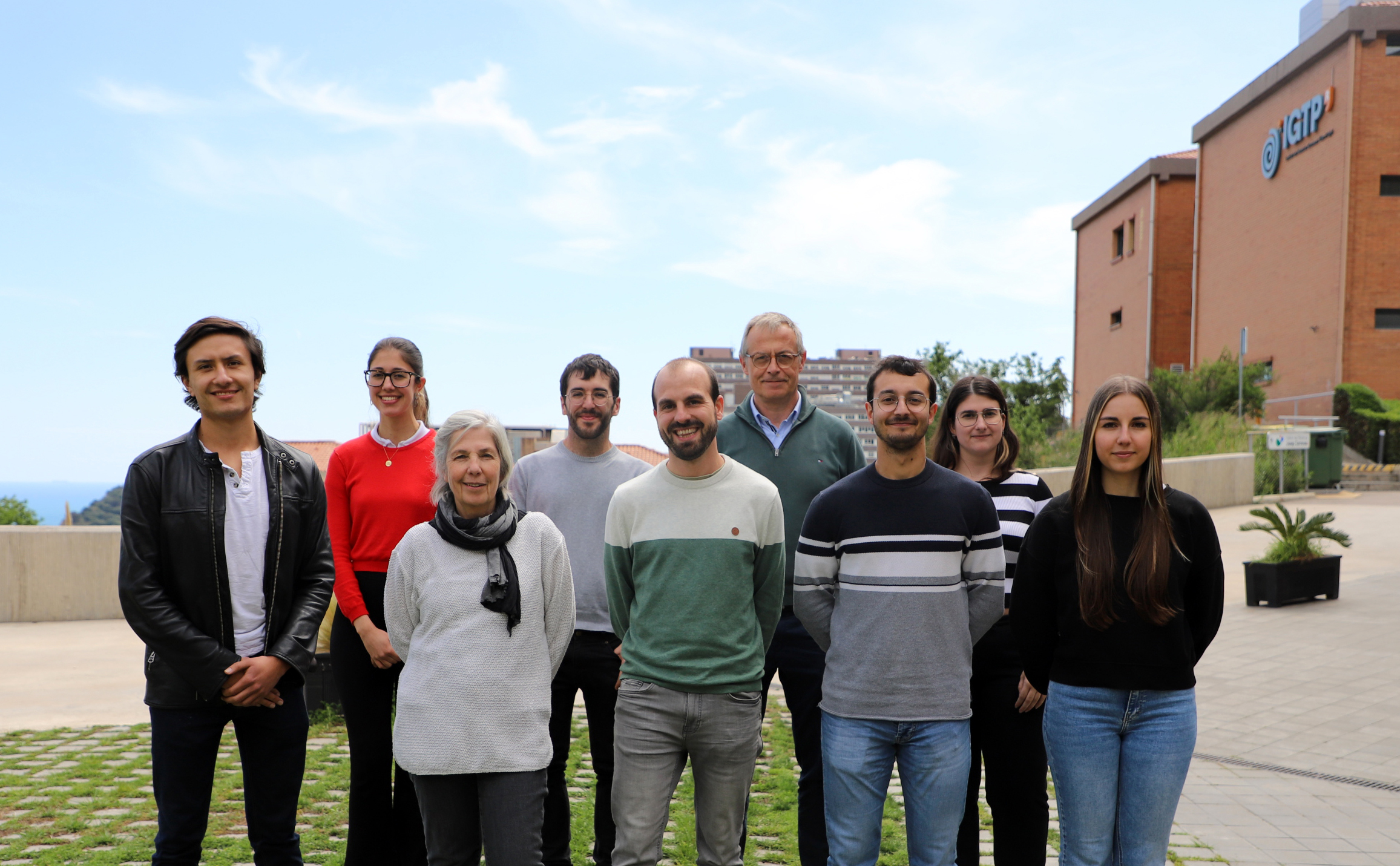
An IGTP study, published in Movement Disorders, highlights the potential of platelets for investigating biomarkers of Parkinson's disease progression. Some of the changes were also observed in an independent cohort of 15 patients with early-onset sporadic Parkinson's disease.
A team from the Genomics and Transcriptomics of Synucleinopathies (GTS) research group at the Germans Trias i Pujol Research Institute (IGTP) has identified molecular changes in platelets associated with the progression of a rare case of early-onset Parkinson's disease. The study, published in Movement Disorders, highlights the value of these blood components as an accessible source for investigating potential biomarkers of disease progression.
The study's first author is predoctoral researcher Susanna Jiménez-Román, and it was co-led by Katrin Beyer, head of the GTS group, and Pau Pastor, a neurologist at Hospital Universitari Germans Trias i Pujol and a researcher in the same group. Researchers from IGTP, Hospital Germans Trias, the Universitat Autònoma de Barcelona and the Josep Carreras Leukaemia Research Institute contributed to the work.
An exceptional case for studying disease progression
The study describes a patient with early-onset Parkinson's disease and rapid progression to dementia who carries a triplication of a genomic region containing SNCA, the gene that encodes the protein alpha-synuclein. This alteration arose de novo, meaning it was not inherited from either parent, and spans a 2.41-megabase region containing 21 genes.
Following the patient over time allowed the researchers to compare gene expression - which provides information about gene activity - in the early stages of the disease, at the age of 41, and after the development of dementia, at the age of 44. The team observed more progression-associated changes in gene expression in platelets than in whole blood.
The genes whose expression changed included those involved in mitochondrial function, protein synthesis and the regulation of inflammation. These findings provide insights into molecular processes that could be involved in disease progression.
"This exceptional case has allowed us to study how molecular signals evolve as Parkinson's disease progresses. Platelets show more pronounced changes than whole blood, highlighting their value as an accessible source for investigating potential biomarkers of progression," explains Susanna Jiménez, first author of the article.
Connections with other forms of Parkinson's disease
To explore whether some of these changes were also present in other forms of the disease, the team analysed a selection of genes in an independent cohort of 15 patients with early-onset sporadic Parkinson's disease and 18 healthy individuals as a comparison group.
In these patients' platelets, the researchers observed differences in expression that matched some of the changes found in the genetic case: reduced expression of an SNCA RNA variant and the YWHAB gene, a member of the 14-3-3 family, and increased expression of MMRN1 and two genes involved in protein synthesis. These differences were statistically significant after correction for multiple comparisons. In contrast, no significant differences were found in whole blood for the genes analysed.
This overlap points to possible shared molecular mechanisms between genetic and sporadic forms of the disease.
"The relevance of this study extends beyond this rare genetic alteration. Some of the molecular signals identified are also present in patients with early-onset sporadic Parkinson's disease. This suggests that studying rare cases can help us understand shared mechanisms and open up new avenues for investigating disease progression," says Jiménez.
The findings provide a basis for further research into platelets as a source of blood biomarkers. However, the longitudinal follow-up is limited to a single patient assessed at two stages of the disease. The comparison with the independent cohort identifies some shared changes but does not validate their usefulness as biomarkers of progression. Further research will be needed to assess this potential application.
Funding
The research received funding from the Spanish Ministry of Science and Innovation through projects PI21/00833, PI21/00886, PMP22/00100 and PI24/00214, within the National R&D&I Plan and funded by the Instituto de Salud Carlos III (ISCIII) and the European Regional Development Fund (ERDF).
Reference
Jiménez-Román S, Adamuz D, Mena J, Tuset A, Mallo M, Menendez A, Samaniego D, Ispierto L, Vilas D, Pastor P, Beyer K. Severe Parkinson's Disease Linked to SNCA Locus Triplication Is Associated with Expression Changes in Platelets: A Case Report. Movement Disorders. Published online on 14 October 2026. DOI: doi.org/10.1002/mds.70529