
CEEISCAT advances Pan-Téstate to strengthen online screening for HIV and viral hepatitis among GBMSM and trans women in Spain
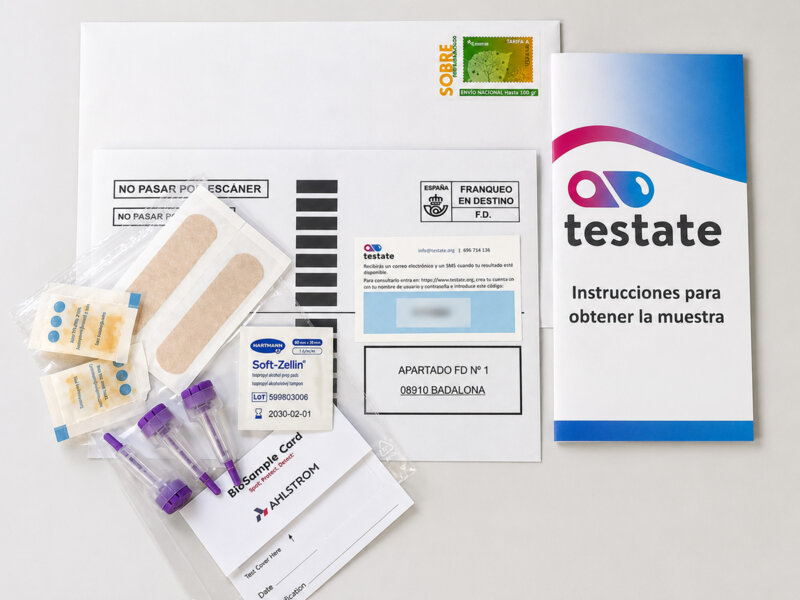
The Centre for Epidemiological Studies on Sexually Transmitted Infections and HIV/AIDS of Catalonia (CEEISCAT), a research group of the Germans Trias i Pujol Research Institute (IGTP) affiliated with the Research Program in Public Health and Primary Healthcare (CORE), is developing Pan-Téstate, an extension of the TÉSTATE project. In recent years, this self-sampling project has evaluated its performance in screening for HIV, syphilis, gonorrhoea, SARS-CoV-2 and MPOX. In this new phase, the project incorporates simultaneous screening for hepatitis B (HBV), hepatitis C (HCV) and HIV using dried blood spot samples self-collected at home and sent by post to the laboratory.
Pan-Téstate is an online self-sampling intervention aimed at gay, bisexual and other men who have sex with men (GBMSM) and trans women, with the goal of improving early diagnosis, identifying undiagnosed infections, promoting self-care and linkage to healthcare services, as well as detecting missed opportunities for HIV prevention.
According to Cristina Agustí, principal investigator of the project, "Pan-Téstate highlights the importance of normalising testing and making the screening process as accessible as possible, confidentially and from home. With just a few drops of dried blood, it is possible to screen for three different infections, reducing barriers and bringing diagnosis closer to the people who need it most. The project is particularly aimed at the populations most affected, such as GBMSM and, importantly, trans women, who often face greater barriers in accessing healthcare services".
The project is aligned with the international objectives of the World Health Organization, which aims to eliminate viral hepatitis as a public health threat by 2030. At the same time, HCV transmission remains high in certain subgroups of GBMSM, particularly in higher-risk contexts and chemsex settings. In Europe, the prevalence of HCV among GBMSM is estimated at 4.7%, and in 2022, 16% of hepatitis B cases reported in the EU/EEA occurred in this population. In Spain, the prevalence of active HCV infection among GBMSM is estimated at between 0.26% and 0.40% in HIV-negative individuals, while it is significantly higher (2.4%) among people living with HIV, with an overall lifetime diagnosis rate of 1.8%. Although lower than the prevalence observed across Europe, these figures remain clearly above those of the general population and often go unnoticed due to the asymptomatic nature of the infection, reinforcing the need to promote early and accessible screening strategies. In this regard, self-sampling is an intervention recommended by the WHO to improve access to screening among key populations.
In 2024, 3,340 new HIV diagnoses were reported in Spain. Of these, 54.3% were among men who have sex with men (GBMSM). Late diagnosis accounted for 51.1% of new HIV cases. At the same time, the growing demand for pre-exposure prophylaxis (PrEP) highlights the need for accessible, low-threshold strategies that ensure appropriate prior screening for HIV and hepatitis.
Previous results from the TÉSTATE project support this approach: an estimated HIV prevalence of 2.45%, active HCV infection of 0.96%, an overall positivity rate for chlamydia and gonorrhoea of 20.7%, and high linkage-to-care rates (94.7% for HIV). The program's acceptability was very high, with users showing a clear willingness to repeat the screening.
Pan-Téstate expands on this experience by incorporating hepatitis B screening, identifying people who are not vaccinated against hepatitis B for referral to vaccination services, and validating the use of DBS (Dried Blood Spot) samples for HBsAg detection. Thanks to just a few drops of dried blood, the program enables simultaneous detection of HIV, hepatitis B and hepatitis C, simplifying the process and reducing barriers to access. The program also identifies missed opportunities for HIV prevention.
According to Hernán S. Perea Cortés, project manager of the project, "Pan-Téstate responds to a clear public health need: reducing inequalities in access to screening, especially among key populations. Stigma and time or geographical constraints remain real barriers. This project proposes an innovative, evidence-based strategy to provide early and high-quality diagnosis, moving towards greater equity in health".
Participation in the program is promoted through different channels to facilitate access for as many people as possible: PrEP services, STI clinics, NGOs and community centres, dating apps, social media and LGTBIQ+ community spaces, with a total of 1,000 self-sampling kits being distributed.
Before its launch, Pan-Téstate was piloted during a workshop organised at the NGO Stop. This experience helped improve practical aspects of the program, questionnaire items and the usability of the self-sampling system.
With Pan-Téstate, CEEISCAT reinforces its commitment to innovation in public health, promoting screening models that reduce barriers and strengthen equity in access to healthcare and self-care.
The project is funded by Gilead Sciences and the Department of Health of the Government of Catalonia, and is carried out in collaboration with the Microbiology Unit at Germans Trias i Pujol Hospital and the Fight Infections Foundation.
More information: https://testate.org/
References
Alarcón Gutiérrez M, Palma Díaz D, Forns Cantón ML, Fernández-López L, García de Olalla P, Rius Gibert C. Trends in Sexual Health of Gay, Bisexual, and Other Men Who Have Sex with Men, and Transgender Individuals: Apps Driven Testing Program for HIV and Other STIs in Barcelona, Spain (2016-2023). J Community Health. 2024 Jun;49(3):429-438. DOI: 10.1007/s10900-023-01310-9.
Ministerio de Sanidad. Encuesta europea on-line para hombres que tienen sexo con hombres (EMIS-2017): resultados en España. Ministerio de Sanidad; 2020. Available from: https://www.sanidad.gob.es/areas/DCVIHT/investigacion/EMIS.htm
Palma D, Alarcón M, García de Olalla P, Guerras JM, Pericas C, García J, Barberá MJ, Ayerdi O, Vera García M, Román-Urrestarazu A, Belza MJ, Rius C. Hepatitis C antibody prevalence and active hepatitis C infection in HIV-negative gay, bisexual, and other men who have sex with men in Barcelona and Madrid, Spain (March 2018-March 2021). IJID Reg. 2023 Jul 7;8:95-104. DOI: 10.1016/j.ijregi.2023.07.001.