
Large-scale study analyses the impact of climate on Legionnaires’ disease in Catalonia
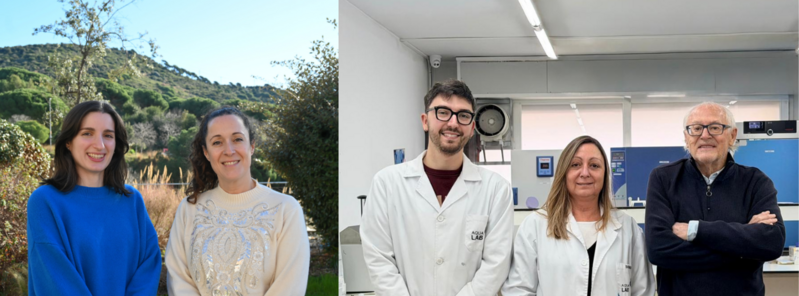
A joint study by the Germans Trias i Pujol Research Institute (IGTP), AQUALAB, the Public Health Agency of Catalonia, the Meteorological Service of Catalonia and Fundació Lluita contra les Infeccions has analysed the relationship between climatic conditions, the presence of Legionella in water systems and cases of Legionnaires' disease in Catalonia. The study, published in the journal Water Research, reveals a link between these different factors and highlights the need to adapt prevention and surveillance strategies in the context of climate change.
Legionella is a bacterium that occurs naturally in some aquatic environments and can proliferate in artificial installations such as pipework, cooling towers and ornamental fountains. When dispersed in the form of aerosols, it can be inhaled and cause respiratory infections which, in some cases, develop into severe pneumonia -known as Legionnaires' disease. This bacterium grows particularly well in temperate water, between 25 and 42 °C, a range that is increasingly being reached due to rising temperatures associated with climate change. This context creates more favourable conditions for Legionella to multiply and increases the risk to public health.
Although several studies have already examined the relationship between climate and cases of Legionnaires' disease, there has so far been limited information on how meteorological conditions influence artificial water systems, only source of infection of the disease. A large-scale study led by the Clinical and Environmental Infectious Diseases Study Group (CEID) at IGTP, published in one of the leading journals in the field of water management and environmental science, has addressed this issue from a comprehensive perspective. This multidisciplinary work involved collaboration with the AQUALAB laboratory, the Public Health Agency of Catalonia, the Meteorological Service of Catalonia, Fundació Lluita contra les Infeccions and IGTP's Biostatistics Unit.
This is the first study of its kind to be based on samples obtained through routine monitoring of water systems, rather than from installations investigated following outbreaks or specific cases. The research analyses how factors such as ambient and water temperature, rainfall and humidity influence both the presence of Legionella in water systems and the incidence of Legionnaires' disease in Catalonia, and links these environmental data with reported cases. In total, more than 32,000 water samples collected between 2018 and 2023 were analysed, excluding 2020 due to the impact of the pandemic, together with all notified cases of the disease and meteorological data from the same period.
Rising temperatures favour the presence of Legionella
The results show that increasing temperatures and longer warm periods create ideal conditions for Legionella to increase its presence in water systems. When ambient temperatures rise, installations such as cold water systems or cooling towers warm sufficiently for the bacterium to multiply. As explained by Elisenda Arqué, first author of the study and a PhD student at IGTP, "prolonged heat episodes not only raise ambient temperatures, but also transform the internal conditions of water systems, making them more vulnerable to bacterial colonisation". In the months following such episodes, cases of Legionnaires' disease tend to increase.
In addition, the researchers observed that cold water systems, often considered less problematic, can become a risk factor in contexts of intense heat. "When outdoor temperatures exceed certain thresholds, these systems become critical points", highlights Sonia Ragull, head of laboratory at AQUALAB.
The study also detected a gradual increase in positive samples over the years analysed, in parallel with the rise in reported cases. Although most showed low bacterial levels, samples with high loads were associated with subsequent increases in disease incidence.
Another relevant finding is that, within the most prevalent species, L. pneumophila, serogroup 1 and serogroups 2-14 are equally represented in the environment, even though the most commonly used diagnostic methods only detect serogroup 1. This suggests that some infections may go unrecorded. In this context, Noemí Párraga, corresponding author and co-leader of the CEID group at IGTP, stresses that "the current challenge in prevention strategies is not only to detect Legionella, but to anticipate high-risk periods and installations in the context of climate change".
Adapting to a changing climate
In light of this evidence, the study indicates that global warming is creating conditions that favour the colonisation of water systems by Legionella and, consequently, an increase in Legionnaires' disease. For the researchers, this underlines the need to strengthen surveillance, adapt prevention strategies and improve clinical diagnostics. "Climate change not only affects natural ecosystems, but also human infrastructure, with clear consequences for health", concludes Miquel Sabrià, scientific director of AQUALAB.
Looking ahead, the authors highlight the need to extend these studies to other regions and longer time periods, improve detection techniques and integrate additional environmental and structural variables. This approach could help to better anticipate climate-related risks, guide public health policies and reinforce prevention strategies in response to the expected rise in Legionnaires' disease.
Reference
Arqué E, Ragull S, Villodres-Moreno D, Alsina-Samaniego A, Satorra P, Tebé C, Rosell-Duran G, Pérez-Lallave D, Pedro-Botet L, Sabrià M, Párraga-Niño N. Impact of meteorological factors on Legionella colonisation of water systems and the incidence of Legionnaires' disease. Water Res. 2026 Jan 9;292:125365. DOI: 10.1016/j.watres.2026.125365.