
A systematic review organises available omics data on pituitary tumours
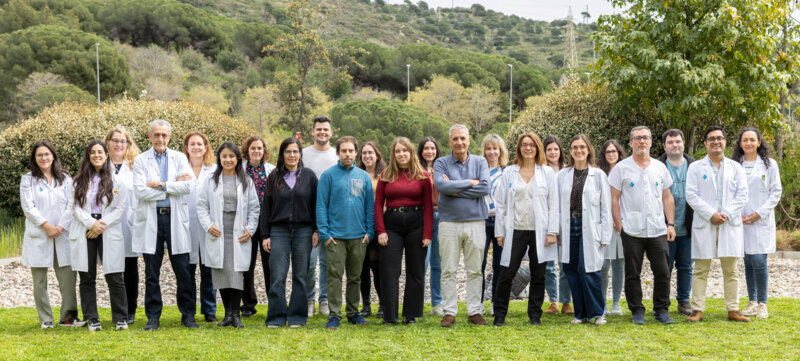
A recent study has carried out a systematic review of the scientific literature on omics data generated in pituitary tumours, with the aim of organising, cataloguing and facilitating the reuse of publicly available resources for future research projects.
Led by the Endocrinology, Thyroid and Obesity Research Group at the Germans Trias i Pujol Research Institute (IGTP), the study analyses 471 papers published up to June 2025 that use different omics approaches-such as genomics, transcriptomics, epigenomics or proteomics-applied to pituitary neuroendocrine tumours (PitNETs). Based on this comprehensive review, the authors have developed a centralised catalogue of datasets, including information on data accessibility and the availability of associated clinical annotations.
This catalogue brings together in a single space resources that were previously scattered across multiple publications and repositories, thereby facilitating the secondary use of data for validation studies, benchmarking, data integration and the development of new research approaches.
"We have implemented a systematic review of all published omics studies in pituitary tumours and generated a catalogue that centralises the available data, the methods used and the associated clinical annotations, with the aim of facilitating their use in future research and precision medicine projects," explains Joan Gil, researcher at IGTP and at the Institut de Recerca de l'Hospital de la Santa Creu i Sant Pau, and first author of the study.
The review highlights that, despite the sustained growth of omics studies in pituitary tumours, a significant proportion of the available data is not easily reusable due to a lack of standardisation and sufficient clinical annotation. This limitation represents a major obstacle to the development of robust and comparable predictive models across studies.
"Despite methodological advances in genomics, transcriptomics or proteomics, the lack of clinically well-annotated and standardised datasets continues to limit the ability to develop robust predictive models in pituitary diseases," notes Manel Puig-Domingo, researcher at IGTP, leader of the research group and senior author of the study.
In this context, the work not only compiles data but also organises it according to its potential value for future precision medicine projects, offering a critical overview of the current state of the field. The resulting catalogue is presented as a support tool for researchers interested in the study of pituitary tumours and associated syndromes, such as acromegaly or Cushing's disease, as well as for initiatives focused on data reuse and collaborative research.
Reference
Gil, J.; de Pedro-Campos, P.; Carrato, C.; Jardí-Yanes, P.; Marques-Pamies, M.; Rodríguez-Lloveras, H.; Rueda-Pujol, A.; Marcos-Ruiz, J.; Martinez-Saez, E.; Alvarez, C.V.; et al. Assessing the Value of Data-Driven Frameworks for Personalized Medicine in Pituitary Tumours: A Critical Overview. Mach. Learn. Knowl. Extr. 2026, 8, 16. DOI: https://doi.org/10.3390/make8010016
Funding
This research was funded by the Instituto de Salud Carlos III through grant PMP22/00021, supported by European Union - NextGenerationEU funds, awarded to Manel Puig-Domingo, and also received partial support from the Spanish Society of Endocrinology and Nutrition (SEEN). The funding bodies had no role in the study design, data collection and analysis, decision to publish, or preparation of the manuscript.