
About
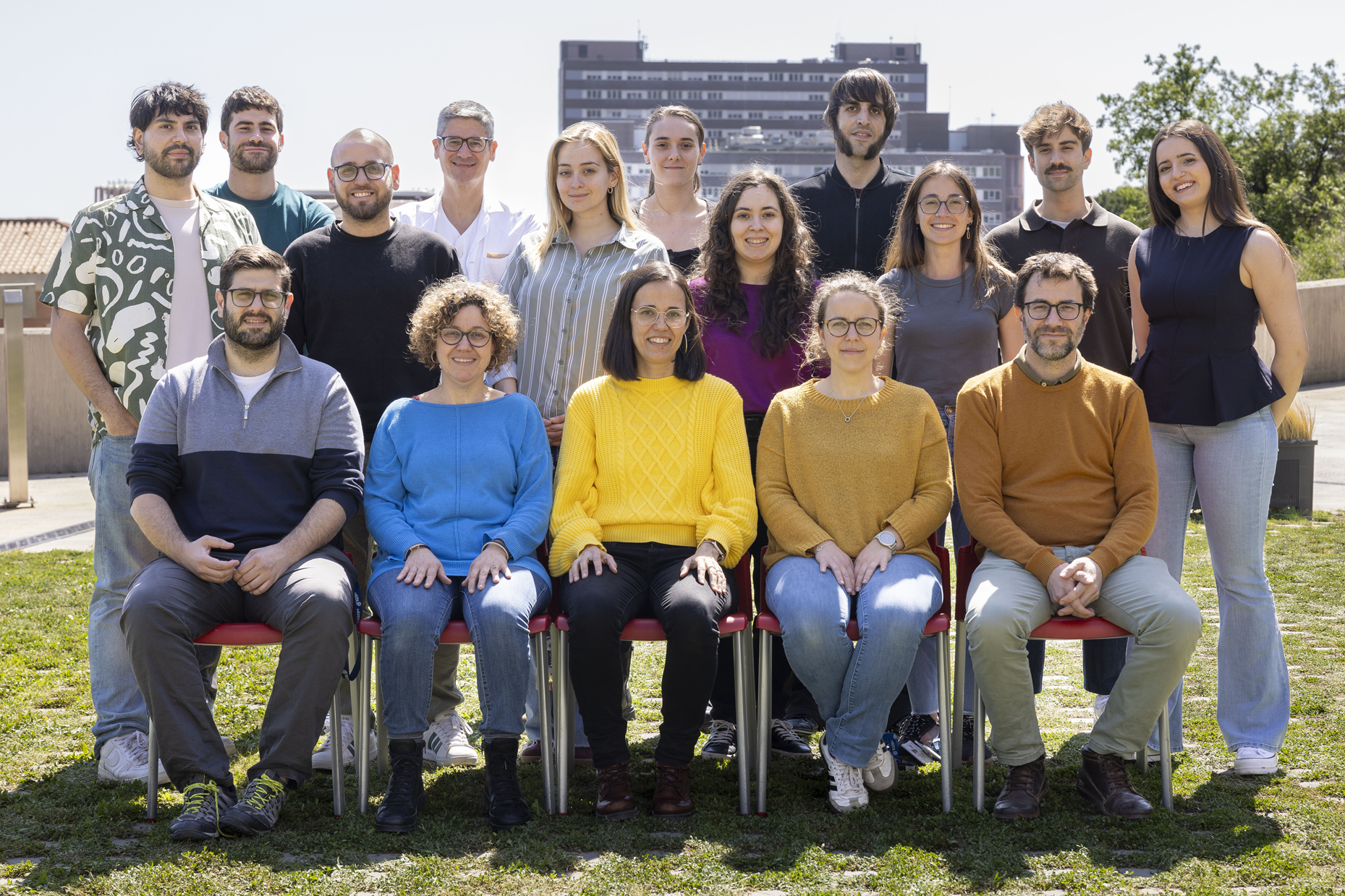
The Badalona Neuromuscular Research Group (GRENBA) is made up of clinical staff from the Neurology and Paediatric services at Germans Trias i Pujol University Hospital and specialised basic and translational researchers in the laboratory at IGTP.
This multidisciplinary team has the main objective of looking for solutions for neuromuscular patients. To achieve this, the team relies on its extensive clinical expertise in the diagnosis and management of these patients, and it has recently built a powerful patient database.
In the laboratory, the group has extensive expertise in genetic, epigenetic, transcriptomic and proteomic techniques to study at the molecular level the pathogenicity of prevalent neuromuscular diseases such as myotonic dystrophy type I, glycogenosis type V and Duchenne muscular dystrophy. The team is also experienced in generating cellular models from patient samples and biopsies, and in testing new treatments in vitro, in animal models and in patients. Additionally, the researchers work on many collaborative projects with national and international researchers also involved in the study of these pathologies.
Keywords: clinical research, real-world data collection (registries/natural history), cellular models, long-read genomic sequencing, transcriptomics, proteomics, supercomputing bioinformatics analyses, treatments, muscle (de)regeneration, muscle fibrosis and fat accumulation, pathological mechanisms.
Group leader
- Gisela Nogales Gadea
Gisela Nogales Gadea
Dr Gisela Nogales-Gadea is a senior biomedical researcher and group leader at the Badalona Neuromuscular Research Group (GRENBA), part of IGTP. She received her BSc (2002) and MSc (2004) in Biology from the University of Barcelona, followed by a PhD (2008) in neuromuscular and mitochondrial pathology from Vall d'Hebron Research Institute, during which she helped develop a McArdle disease knock-in mouse model. She then continued her postdoctoral training under a CIBERER contract and subsequently a prestigious Sara Borrell fellowship (ISCIII) at Sant Pau Research Institute and Maastricht University, specializing in immune-based neuromuscular diseases. In 2015, she secured the Miguel Servet ISCIII program and established GRENBA at IGTP, leading a multidisciplinary team focusing on genetics, epigenetics, transcriptomics, proteomics, and cellular models for disorders such as Myotonic Dystrophy type 1. In 2023, she received a MICINN consolidation grant, reinforcing her position within IGTP. She coordinates DM1-Hub, a pioneering national project that has created a network of over 100 health profesionals to study the natural history of DM1 in Spain.
Contact: gnogales(ELIMINAR)@igtp.cat
ORCID: 0000-0002-7414-212X - Mònica Suelves Esteban

Mònica Suelves Esteban
Dr Mònica Suelves is a molecular and cell biologist with more than 20 years of experience and a solid background in the fields of myogenesis, tissue regeneration, muscular dystrophies, stem cells and epigenetics. Dr Suelves completed her doctoral thesis at Centre d'Investigació i Desenvolupament - Consejo Superior de Investigaciones Científicas (CID-CSIC, Barcelona). She was trained as a postdoctoral researcher for 10 years at world-leading institutions such as Institut de Génétique et de Biologie Moléculaire et Cellulaire (IGBMC, Strasbourg, France), Institut de Recerca Oncològica (IRO, Barcelona), Centro de Regulación Genómica (CRG, Barcelona) and Centro de Medicina Regenerativa de Barcelona (CMRB, Barcelona). In 2006, she was awarded by the Ramón y Cajal Program (Spanish Ministry of Science and Innovation – MICINN) and, in 2010, she started her stage as principal investigator at Institute of the Predictive and Personalized Medicine of Cancer (IMPPC), currently merged with the Germans Trias i Pujol Research Institute (IGTP). In 2020, Dr Suelves joined the Neuromuscular Unit at IGTP (GRENBA: Badalona Neuromuscular Research Group) and, in 2023, she was recognised as an established researcher by MICINN. Currently, Dr Suelves' research focuses on addressing new pathophysiological mechanisms in neuromuscular diseases and the search for treatments for patients with muscular dystrophies.
Contact: msuelves(ELIMINAR)@igtp.cat
ORCID: 0000-0001-7095-5804
Team
Researchers and neurologists
Alicia Martinez Piñeiro, PhD, MD(ELIMINAR)
Sebastián Ariel Figueroa Bonaparte, PhD, MD(ELIMINAR)
Miriam Almendrote Muñoz, PhD, MD(ELIMINAR)
Giuseppe Lucente, PhD, MD(ELIMINAR)
Agustín Rodriguez-Palmero Seuma, PhD, MD(ELIMINAR)
Laura Monlleó Neila(ELIMINAR)
Anna Revert(ELIMINAR)
Marc Corral Juan, PhD(ELIMINAR)
Postdoctoral researcher
Georgina Palomés Borrajo, PhD(ELIMINAR)
Rio Hortega contract ISCIII
Anna Revert Barberà(ELIMINAR)
Research nurses
Clara Moliner Diaz(ELIMINAR)
Mireia Lozano Royo(ELIMINAR)
Clara Romero Gisbert(ELIMINAR)
Clinical nurses
Ainoa Sancho Garcia(ELIMINAR)
Clara Moliner
PhD students
Eva Coll Liesa(ELIMINAR)
Pau Maestre Mora(ELIMINAR)
Eduard Juanola Mayos, MD(ELIMINAR)
Alexandra Mercado Amarilla(ELIMINAR)
Project manager
Alvaro Larran, PhD(ELIMINAR)
(ELIMINAR)Research funding and partnerships manager
Alba Herrero Gomez(ELIMINAR)
Postdoctoral data manager
Juan Manuel García illarramendi
Senior bioinfomatician
Daniel Borràs, PhD(ELIMINAR)
Laboratory technicians
Alicia López Martín(ELIMINAR)
Alejandro Montalva Gimenez(ELIMINAR)
Research lines
Myotonic dystrophy type 1
Myotonic dystrophy type 1 is a multisystemic disorder that affects skeletal muscles, the heart and the central nervious system, among others. The symptoms can appear at any age, from birth to very late in life, and there is no current treatment to stop or delay the progression of the disease. The team is actively working in elaborating patients' registries, improving the diagnosis, stablishing pathological mechanims, studing possible phenotype modulators, discovering biomarkers and evaluting the utility of novel therapies.
McArdle disease
McArdle disease is a rare inherited metabòlic disorder, caused by the deficiency of the muscle glycogen phosphorylase. Patients have exercise intolerance, muscle cramps, weakness and fatigue, when performing activities that require aerobic exercise and isomètric contractions. The group has been involved in the generation of the Spanish registry of patients, in improving the diagnosis, in descifering the pathological mechanisms associated to this condition, understanding the role of phenotype modulators, identifying biomarkers and assessing new therapies.
Duchenne muscular dystrophy
DMD is a very severe genetic muscle disorder marked by progressive muscle degeneration, where chronic inflammation, fibrosis, and fatty deposition replace functional muscle tissue over time. Based on previous studies of the group, they are analysing a new therapeutic target to reduce fibrosis, intramuscular fat accumulation and inflammation in DMD and deciphering the molecular mechanisms involved.
Sarcopenia
The age-related loss of muscle mass and strength, is due to a complex interplay of biological mechanisms, including muscle atrophy, stem cell depletion, mitochondrial dysfunction and metabolic deterioration. As life expectancy increases worldwide, so does the prevalence of sarcopenia, which contributes to frailty, falls, hospitalisation and increased mortality. The group is working to identify new therapies to prevent or reverse the muscle loss associated with ageing.
Active projects
DM1-HEART: Searching biomarkers of heart damage in Myotonic Dystrophy type 1 patients
PI: Sebastián Figueroa Bonaparte
Funding agency: Proyectos del Legado JMC de Can Ruti
Agency code: 2022_55
Duration: 2023 - 2027
DM1-HEART-EXTEND: Extending the search for biomarkers of heart damage in Myotonic Dystrophy type 1
PI: Gisela Nogales Gadea
Funding agency: AFM Telethon
Agency code: #24757
Duration: 2023 - 2026

Creation of an integral node for Myotonic Dystrophy type 1 in Spain: clinical record, genomic, epigenomic and proteomic maps (DM1-Hub)
PI: Gisela Nogales-Gadea
Funding agency: Instituto de Salud Carlos III
Agency code: PMPER24/00007
Duration: 01/01/2025 – 31/12/2026
WHOLE_ Myotonic Dystrophy type 1 (DM1)
PI: Eduard Juanola Mayos
Funding agency: Fundació llegat JMC
Agency code: 2024-27
Duration: 01/04/2025 - 31/12/2030
Integra-DM1, Integración del transcriptoma, el metaboloma y el microbioma para la identificación de nuevos biomarcadores en la distrofia miotónica tipo 1
PI: Gisela Nogales Gadea, Josep Manyé, Arturo Lopez Castel (PI coordinator)
Funding agency: Fundación Ramón Areces
Duration: 2026-2029
INTERUPT, Descifrando el efecto de las interrupcions en pacientes con distròfia miotónica tipo 1: anàlisis del impacto patogéncio, Evaluación funcional y tratamientos en modelos 3D
PI: Gisela Nogales Gadea
Funding agency: Instituto de Salud Carlos III
Agency code: PI25/00905
Duration: 2026-2029
Evaluation of new inhibitors as anti-fibrotic and pro-regenerative molecules to treat Duchenne muscular dystrophy
PI: Mònica Suelves
Funding agency: Duchenne Parent Project Spain
Agency code: DPPE/02_2024
Duration: 01/01/2025 – 31/12/2026
Past projects
DM1-Corazón: Buscando biomarcadores de daño cardíaco en pacientes con Distrofia Miotónica tipo 1
PI: Gisela Nogales
Funding agency: Instituto de Salud Carlos III (ISCII)
Agency code: PI22/00104
Duration: 01/01/2023 - 31/12/2025

DIMINUTOS, Childhood and adult myotonic dystrophy: evaluation of new treatments and pathogenicity through genetic, epigenetic and molecular imaging analysis
PI: Gisela Nogales
Funding agency: Instituto de Salud Carlos III (ISCII)
Agency code: PI18/000713
Duration: 01/01/2019 - 30/06/2023
Exploring HDAC11 functions in muscular dystrophies
PI: Mònica Suelves
Funding agency: Ministerio de Ciencia e Innovación (MICINN)
Agency code: PID2020-118730RB-I00
Duration: 01/01/2021 - 31/12/2024
Contracte I-PFIS de Judith Nuñez
PI: Gisela Nogales
IFI20/00022
Investigación translacional en distrofia miotónica para el desarrollo de un tratamiento avanzado de RNA (DISMIOTAXT project)
PI: Gisela Nogales
Funding agency: Proyecto de Incentivación de la consolidación investigadora del Ministerio de Ciencia e Innovación
Agency code: CNS2022-135519
Duration: 2023 - 2025

Investigación traslacional sobre la distrofia miotónica para el desarrollo de una terapia avanzada basada en ARN
PI: Gisela Nogales
Funding agency: Ministerio de Ciencia e Innovación
Agency code: CPP2022-009960
Duration: 2023 - 2025

Exploring new inhibitors in Duchenne muscular dystrophy
PI: Mònica Suelves
Funding agency: AFM Telethon
Agency code: 23557
Duration: 15/09/2021 - 30/01/2024
Scientific publications
Highlighted publications
López-Martínez A, Martín-González S, Torres-Conde N, Alcalá-Manso N, Al-Ani A, López de Munain A, Bigot A, Mamchaoui K, Nogales-Gadea G, Arechavala-Gomeza V. Characterization of DMPK and MBNL1 expression in cell models of myotonic dystrophy: a platform for drug screening. NAR Mol Med. 2025 Jun 20;2(3):ugaf023. DOI: 10.1093/narmme/ugaf023.
Odria R, Cardús A, Gomis-Coloma C, Balanyà-Segura M, Mercado-Amarilla A, Maestre-Mora P, Poveda-Sabuco A, Domingo JC, Nogales-Gadea G, Gomez-Sanchez JA, Hurtado E, Suelves M. HDAC11 deficiency regulates age-related muscle decline and sarcopenia. Geroscience. 2025 Aug;47(4):5843-5868. DOI: 10.1007/s11357-025-01611-y.
Núñez-Manchón J, Capó J, Martínez-Piñeiro A, Juanola E, Pesovic J, Mosqueira-Martín L, González-Imaz K, Maestre-Mora P, Odria R, Cerro-Herreros E, Naldaiz-Gastesi N, López de Munain A, Artero R, Savic-Pavicevic D, Vallejo-Illarramendi A, Mamchaoui K, Bigot A, Mouly V, Suelves M, Nogales-Gadea G. Immortalized human myotonic dystrophy type 1 muscle cell lines to address patient heterogeneity. iScience. 2024 May 7;27(6):109930. DOI: 10.1016/j.isci.2024.109930. Erratum in: iScience. 2024 Dec 09;27(12):111499. DOI: 10.1016/j.isci.2024.111499.
Cerro-Herreros E, Núñez-Manchón J, Naldaiz-Gastesi N, Carrascosa-Sàez M, García-Rey A, Losilla DP, González-Martínez I, Espinosa-Espinosa J, Moreno K, Poyatos-García J, Vilchez JJ, de Munain AL, Suelves M, Nogales-Gadea G, Llamusí B, Artero R. AntimiR treatment corrects myotonic dystrophy primary cell defects across several CTG repeat expansions with a dual mechanism of action. Sci Adv. 2024 Oct 11;10(41):eadn6525. DOI: 10.1126/sciadv.adn6525.
Additional information
Collaborative networks
The GRENBA group actively participates in several national and international collaborative networks aimed at advancing research, clinical care, and awareness in neuromuscular diseases, particularly myotonic dystrophy type 1 (DM1). At the national level, GRENBA coordinates DM1-Hub, the Spanish national registry for DM1, which integrates clinical, lifestyle, neuropsychological, and multi-omics data to improve disease characterization and clinical trial readiness. The group is also part of the Xarxa d'Unitats d'Expertesa Clínica en Malalties Neuromusculars (XUEC Neuromuscular), a network promoted by the Catalan Health Service to ensure coordinated, high-quality specialized care for patients with rare neuromuscular diseases across Catalonia. In addition, GRENBA contributes to the Red Nacional de Distrofia Miotónica (RED-DM), a multidisciplinary Spanish research network focused on the development of innovative therapeutic approaches, including RNA- and DNA-based strategies for DM1.
At the international level, the group participates in strategic initiatives that foster data integration, clinical trial preparedness, and awareness. These include IMPaCT-ELIXIR, which promotes interoperability and reuse of patient registries and omics data within European precision medicine infrastructures, and ELRIN (European Long Read Innovation Network), where GRENBA contributes expertise in repeat expansion disorders and long-read sequencing for rare disease diagnostics. The group is also involved in the Euro-DM-CRN, a European clinical research network for myotonic dystrophies aimed at harmonizing protocols and supporting multinational studies, and in the Global Alliance for Myotonic Dystrophy Awareness, a worldwide coalition of over 60 organizations working to raise awareness, improve diagnosis, and promote access to research and care.
Doctoral theses
Title: Deciphering the Effects of HDAC11 Deficiency in Distinct Pathophysiological Skeletal Muscle Conditions
Author: Renato Odria
Supervisor: Mònica Suelves
University: Universitat de Barcelona
Date of defence: 07/11/2025
Title: Caracterización clínica y genética de una serie de pacientes con distrofia miotónica tipo 1
Author: Miriam Almendrote Muñoz
Supervisors: Gisela Nogales Gadea, Alba Ramos Fransi
University: Universitat Autònoma de Barcelona (UAB)
Date of defence: November 2023
Title: Deciphering the importance of heterogeneity in Myotonic Dystrophy type 1
Author: Judit Núñez Manchón
Supervisor: Gisela Nogales Gadea
University: Universitat de Barcelona
Date of defence: 16/12/2024
Master’s theses
Title: Study of the normal population provides new information about the prevalence of Myotonic Dystrophy type 1 and Oculopharyngeal Muscular Dystrophy
Author: Nacho Jorda Llorens
Supervisors: Gisela Nogales Gadea
University: Universitat Autònoma de Barcelona (UAB)
Title: Deciphering the impact of HDAC11 deficiency in the dystrophic fibrosis
Author: Paula Bueno
Supervisor: Mònica Suelves
University: University Internacional de Catalunya
Date of defence: June 2024
Title: HDAC11: a novel modulator of ageing skeletal muscle
Author: Aina Cardús Garcia
Supervisors: Mònica Suelves
University: Universitat de Barcelona
Outreach
2025
Public engagement and community involvement were strongly promoted through outreach initiatives linked to the DM1-Hub and the city of Badalona. The group organised and participated in several DM1-Hub events, designed to bring research closer to patients, families, clinicians, and patient organizations, fostering bidirectional knowledge exchange and awareness. In parallel, three major solidarity events were held in Badalona and will continue in 2026: a solidarity trail, and a charity gala at the Teatro Zorrilla. These initiatives, promoted by local civic organizations, combined community participation with science outreach and fundraising, to support neuromuscular research carried out by the GRENBA group at IGTP. Beyond their economic impact, these events significantly increased public visibility of rare neuromuscular diseases and reinforced the connection between research, patients, and society (Amics de Can Ruti).
2024
- IGTP Podcast – Malalties Minoritaries Episode (Un Bri de Ciència). More information
- Talks at first year high school students at the Institut Caterina Albert (Barcelona, Centre FEDAC (Sta Coloma), Escola-Institut Manresa (Manresa)
- Host high school students for practices (Col·legi Claret and Escola Virolai, Barcelona)
- Participation at European Researcher's Night
- Participation in the organization of the Annual Cursa Benèfica per les Malalties Minoritaries (from 2016 at present Badalona)
- Participation in the organization of the Trail de Muntanya per les Malalties Minoritaries (2024, 2025, Badalona)
- Participation in the organization of the Gala Solidaria per la Recerca de les Malalties Minoritàries (from 2015 at present Badalona, Teatre Zorrilla, Badalona)
- Interviews at Radio POMAR, Radio Nacional de España, Radio Badalona
Others
The Badalona Neuromuscular Research Group unveils its new logo
(May 2023) The group previously known as Neuromuscular and Neuropediatric Research Group has updated its name to Badalona Neuromuscular Research Group (GRENBA) and has created its own logo. For the design process, students from the Escola d'Art Superior Pau Gargallo, Badalona, visited the research group at IGTP and presented various proposals. Choosing the logo was a challenge, as many were highly creative and well-designed, but in the end, Melissa Abigail Alava Mieles' design emerged as the winner. The research group would like to thank all students for their involvement in this project, as well as professors Miquel Aregay, Montserrat Sayol, and Júlia Cuyàs.
Dr Gisela Nogales Gadea awarded in the Consolidation Researcher Program 2022
(June 2023) The Ministry of Innovation and Science has awarded the Consolidation Researcher Program 2022 to Dr Gisela Nogales Gadea, leader of the Badalona Neuromuscular Research Group (GRENBA) at IGTP. This competitive program, included within the State Programme to Develop, Attract, and Retain Talent of the State Plan (and funded with European funds from the Recovery, Transformation, and Resilience Plan), aims to promote the consolidation of the research career of investigators, encouraging the creation of permanent positions in the affiliated institutions and facilitating the strengthening of the research line through the funding of a project of their own. Dr Nogales started GRENBA in 2015, together with clinical staff from the Neuromuscular Unit of the Neurology Service and the Neuropaediatrics Unit of the Paediatrics Service at HUGTiP, within the framework of a Miguel Servet program funded by Instituto de Salud Carlos III (ISCIII). The award of this program represents a new boost for this team, as it allows the incorporation of Dr Nogales as IGTP staff, and funding for a research project, in which third-generation genetic sequencing technology will be implemented to improve the diagnosis, prognosis, and response to therapy of patients with myotonic dystrophy type 1.
News
‘INTEGRA-DM1’, a comprehensive study of Myotonic Dystrophy type 1 to identify new biomarkers and advance precision medicine
The project, led by INCLIVA with the participation of IGTP and IIS La Fe, has received funding from the Fundación Ramón Areces' PINERA Rare Diseases Research Program. It builds on research conducted within DM1-Hub, Spain's first clinical registry for DM1.
19 IGTP researchers, recognised in a scientific impact ranking
A total of 19 women researchers affiliated with the Germans Trias i Pujol Research Institute (IGTP) feature in the April 2026 edition of the Ranking of Spanish Women Researchers and Women Researchers in Spain, reflectig the relevance of the research conducted both at the institute and across the Can Ruti Campus.
Contact
(+34) 93 033 05 30
Mònica Suelves Esteban
More links
ResearchGate for Gisela Nogales · ORCID for Gisela Nogales · Follow @NMusIGTP on X · Donate via Amics de Can Ruti