At the IGTP TODAY

News

The start of a new international clinical trial to improve treatment for tuberculosis with anti-inflammatory agents

The Experimental Tuberculosis Group at the IGTP has set up this trial, coordinated from Can Ruti, within the European project H2020 ‘SMA-TB’. The study will evaluate the efficacy and safety of adding acetylsalicylic acid or ibuprofen to the antibiotic treatments applied for tuberculosis. It is a phase II trial which will be carried out in South Africa and Georgia, two of the countries the WHO has in its sights to control this infectious disease. The trial has been prepared in the midst of the pandemic, with the added challenge of coordinating it with the restrictions and different stages of the epidemic in each of the countries involved.

- Research

New insights into the mechanisms of how tolerogenic therapies reduce aggressive immune activity in treatments for auto-immune and inflammatory diseases

The Immunopathology research group with the Immunology service and the Multiple Sclerosis Unit at the Germans Trias i Pujol Hospital and Institute continue their research to develop treatments for multiple sclerosis (MS). Their latest paper published in Frontiers of Immunology, examines the mechanisms by which vitamin D3-dendritic cells are used to alter a patient's own lymphocytes so they can be used to inhibit autoimmune responses.

- Research

SNCA transcripts found in blood are candidate biomarkers for Lewy body dementia and Parkinson disease

In a new study published in the Journal of Molecular Science, the Genomics and Transcriptomics of Synucleinopathies Group, led by Dr Katrin Beyer, have got one step nearer to finding a reliable biomarker to differentiate between Lewy body dementia and Parkinson disease in the early stages, when symptoms are very similar. Correct diagnosis is extremely difficult, but essential for these patients as the wrong treatment can have very serious effects.

- Research

The Barcelona Medical Photonics Network: united to improve the health and well-being of society

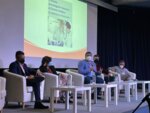
As the research institute of the Germans Trias i Pujol Hospital, the IGTP is one of 8 health research institutes that has joined the ICFO to consolidate a state-of-the-art bench to bedside Barcelona Photonics Technology Network. The Medical Photonics Network of Barcelona was presented on 18 February, it aims to promote the research and development activities in photonics being carried out in the Barcelona area by formalizing the long-running relationship between the ICFO and its biomedical and clinical partners.

- Campus Can Ruti, Research

Blocking the spread of HIV or favouring the spread of the tuberculosis bacteria, the flip side of the Siglec-1 protein's absence

In 2016, the Retrovirology and Clinical Studies group at IrsiCaixa discovered how the absence of the Siglec-1 protein, involved in modulating the immune system, blocks the spread of HIV throughout the body. Now, a study led by the same research group and the Experimental Tuberculosis Unit of the Germans Trias i Pujol Research Institute (IGTP) has shown that, on the other hand, this same deficiency favours the dissemination of Mycobacterium tuberculosis (Mtb), the tuberculosis-causing agent. 

- Research

A pilot study reveals that natural killer cells could track the progress of type 1 diabetes

The Immunology of Diabetes Group, led by Marta Vives-PI has shown that levels of 4 subtypes of natural killer (NK) cells in the blood of Type 1 Diabetes patients change through different stages of the disease. These cells have a complex role in the immune attack during T1D and have been implicated in both the destruction and protection of insulin-producing cells. This pilot study, published in Frontiers in Immunology, tracks the levels of 4 subtypes of NK cells and suggests that these cells are good candidate biomarkers for disease progression.

- Research

Two studies show the way ahead for better non-invasive monitoring of kidney transplants

Members of the Kidney-affecting Diseases Research Group and the Innovation in Vesicles and Cells for Application in Therapy (REMAR-IVECAT) have recently published two studies led by Dr Francesc E. Borràs, which identify possible biomarkers of irreversible damage to transplanted kidneys; a pathology that eventually causes them to stop working. The papers have been published in the International Journal of Molecular Science and the Journal of Nephrology.