
About
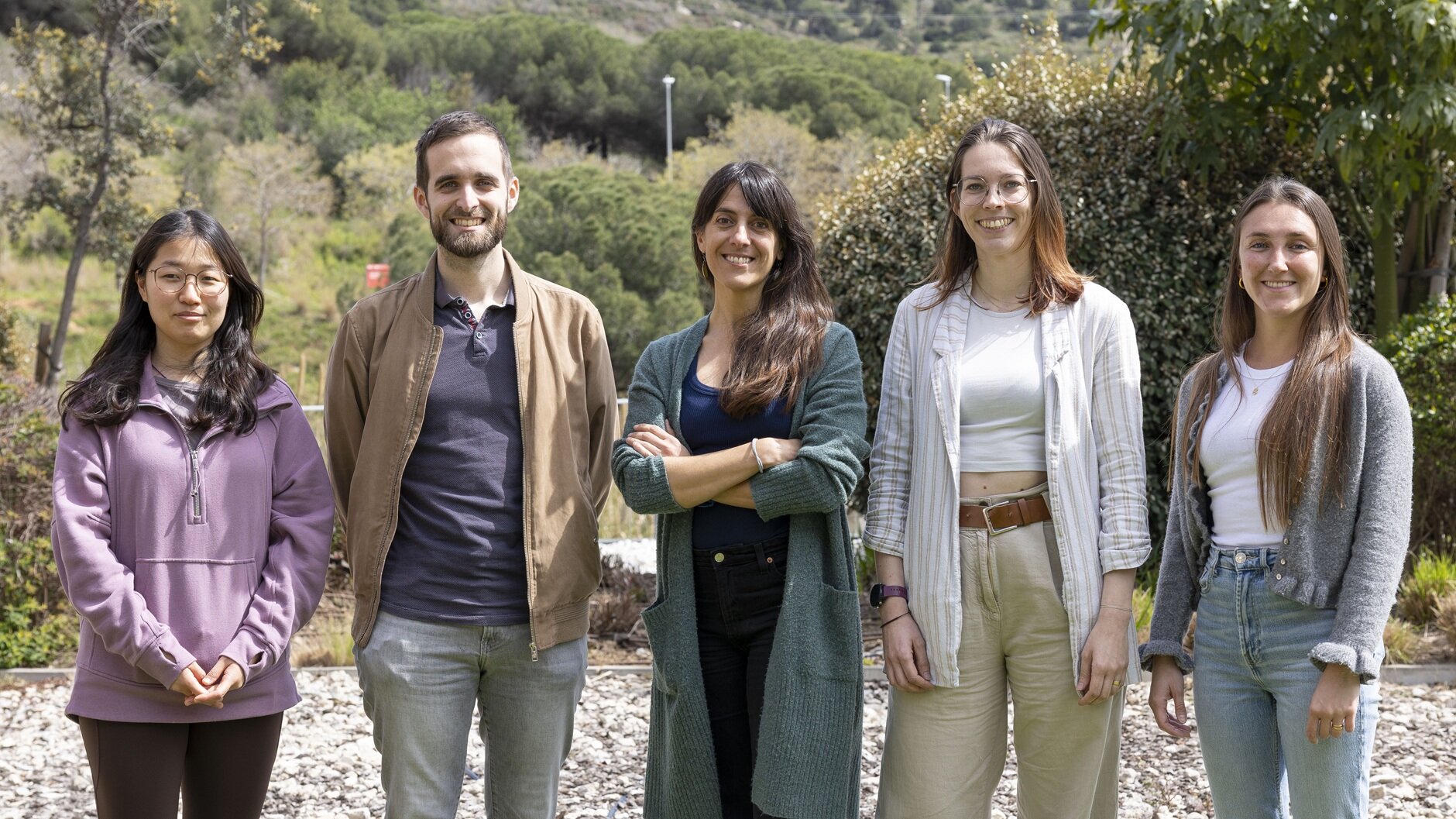
The ENACT Group (Experimental Nephrology and Advanced Cell-based Therapies) is led by Dr Marcel·la Franquesa, who has recently become an established researcher at IGTP.
The group's main objectives are:
- To generate and study relevant in vivo and in vitro models of kidney disease, including podocyte and proximal tubular cell cultures, a glomerulus-on-a-chip model and a swine model of glomerulosclerosis.
- To produce and investigate mesenchymal stem cell-derived extracellular vesicles (MSC-EVs) for therapeutic use in kidney disease.
- To identify and analyse non- or minimally-invasive biomarkers in urine and blood samples from patients, with the aim of finding prognostic markers for chronic kidney disease (CKD) and kidney transplant rejection.
Group leader
- Marcel·la Franquesa Bartolomé, PhD

Marcel·la Franquesa Bartolomé, PhD
Marcel·la Franquesa is a biologist with a translational interest in the field of nephrology. Her research has consistently focused on advanced therapies and regenerative treatments for kidney diseases. She initially worked in gene therapy and cell therapy using mesenchymal stem cells (MSCs), and currently focuses on the field of extracellular vesicles (EVs) as therapeutic tools.
Throughout her career, she has had the opportunity to work in several laboratories, including the Experimental Nephrology Laboratory led by Prof. J. Grinyó at IDIBELL (L'Hospitalet de Llobregat, Barcelona), the Nephrology Laboratory led by Prof. J. Bonventre at Harvard Medical School (Boston, MA), and the Transplantation Laboratory led by Prof. Carla Baan at Erasmus MC (Rotterdam, the Netherlands), together with Dr Martin Hoogduijn.
Dr Franquesa was a board member of ECTORS (the Cell Therapy and Regeneration section of the European Society for Organ Transplantation - ESOT) and is currently President of the Spanish Group for Innovation and Research in Extracellular Vesicles (GEIVEX).
Contact: mfranquesa(ELIMINAR)@igtp.cat
ORCID: 0000-0002-1287-8908
Team
PhD students
Linrong Pan, MD(ELIMINAR)
Master’s student
Lidia Samuelson, BSc(ELIMINAR)
Laboratory technician
Míriam Font(ELIMINAR)
Research lines
Novel therapeutic approaches in experimental kidney disease
This line of research is committed to the research in the potential therapeutic role of MSC-EV (Mesenchymal Stem Cell-Derived Extracellular Vesicles) and their study in different in vivo and vitro kidney damage models.
Non-invasive biomarkers
The group has a strong commitment with the discovery and clinical validation of non or minimally invasive biomarkers for kidney disease. In this line, both urine derived EVs and circulating immune cells are being studied.
Active projects
Vesículas extracelulares en la innovación renal: Modelización, biomarcadores y terapéutica MSC-EV para la glomeruloesclerosis focal y segmentaria - Proyecto EV-FSGS
PI: Marcel·la Franquesa
Funding agency: Instituto de Salud Carlos III (ISCIII) - Acción Estratégica en Salud (AES)
Agency code: PI24/00615
Duration: 01/01/2025 - 12/31/2027
RICORS2040-Renal
PI: Alberto Ortiz (RICORS coordinator) / Marcel·la Franquesa (PI of the IGTP group)
Funding agency: Instituto de Salud Carlos III (ISCIII)
Agency code: RD24/0004/0005
Duration: 01/01/2025 - 12/31/2027
Past projects
Size-exclusion chromatography (SEC) isolated MSC-derived Extracellular Vesicles to pReVEnT the progression of chronic kidney disease - SERVET
PI: Marcel·la Franquesa
Funding agency: Instituto de Salud Carlos III (ISCIII) - Acción Estratégica en Salud (AES)
Agency code: PI20/00097
Duration: 2021-2025
Novel therapeutic approaches to induce tolerance and overcome organ shortage in kidney transplantation
PI: Marcel·la Franquesa
Funding agency: Instituto de Salud Carlos III (ISCIII) - Acción Estratégica en Salud (AES)
Agency code: CP19/00018
Duration: 01/01/2020 - 31/12/2023
RICORS2040-Renal
PI: Alberto Ortiz (Network PI), Marcel·la Franquesa (PI of the ENACT/REMAR group)
Funding agency: Instituto de Salud Carlos III (ISCIII) - Acción Estratégica en Salud (AES)
Agency code: RD21/0005/0009
Duration: 2022-2024
Scientific publications
Highlighted publications
Pan L, Garcia SG, Font-Morón M, Sanroque-Muñoz M, Clos-Sansalvador M, Garcia GM, Borràs FE, Franquesa M. Beyond preclinical promise: can mesenchymal stromal cell-derived extracellular vesicles reliably target tubular epithelial cells? Extracell Vesicles Circ Nucl Acids. 2025 Sep 23;6(3):580-593. DOI: 10.20517/evcna.2025.54.
Perezpayá I, Garcia SG, Clos-Sansalvador M, Sanroque-Muñoz M, Font-Morón M, Rodríguez-Martínez P, Vila-Santandreu A, Bover J, Borràs FE, Cañas L, Franquesa M. Molecular screening of transitional B cells as a prognostic marker of improved graft outcome and reduced rejection risk in kidney transplant. Front Immunol. 2024 Aug 12;15:1433832. DOI: 10.3389/fimmu.2024.1433832.
Garcia SG, Sanroque-Muñoz M, Clos-Sansalvador M, Font-Morón M, Monguió-Tortajada M, Borràs FE, Franquesa M. Hollow fiber bioreactor allows sustained production of immortalized mesenchymal stromal cell-derived extracellular vesicles. Extracell Vesicles Circ Nucl Acids. 2024 May 14;5(2):201-220. DOI: 10.20517/evcna.2023.76.
Garcia SG, Sandoval-Hellín N, Clos-Sansalvador M, Carreras-Planella L, Morón-Font M, Guerrero D, Borràs FE, Franquesa M. Mesenchymal stromal cells induced regulatory B cells are enriched in extracellular matrix genes and IL-10 independent modulators. Front Immunol. 2022 Sep 14;13:957797. DOI: 10.3389/fimmu.2022.957797.
Monguió-Tortajada M, Morón-Font M, Gámez-Valero A, Carreras-Planella L, Borràs FE, Franquesa M. Extracellular-Vesicle Isolation from Different Biological Fluids by Size-Exclusion Chromatography. Curr Protoc Stem Cell Biol. 2019 Jun;49(1):e82. DOI: 10.1002/cpsc.82.
Carreras-Planella L, Monguió-Tortajada M, Borràs FE, Franquesa M. Immunomodulatory Effect of MSC on B Cells Is Independent of Secreted Extracellular Vesicles. Front Immunol. 2019 Jun 6;10:1288. DOI: 10.3389/fimmu.2019.01288.
Additional information
Collaborative networks
The ENACT Group is an active member of the RICORS-2040, a Spanish network for the study of kidney disease with the objective of reducing the burden of this disease expected by 2040.
The team is also active in GEIVEX, the Spanish Group of Research in Extracellular Vesicles.
Doctoral theses
Title: Exploring Extracellular vesicles in Glomerular Disease: Biomarkers, Large-Scale production and Therapeutic insights from a Miniature swine model of experimental Adriamycin-induced Nephropathy
Author: Sergio Garcia Garcia
Supervisor: Marcel·la Franquesa
University: Universitat Autònoma de Barcelona
Date of defence: 04/07/2025
Outreach
In 2024, the ENACT group was actively involved in the organisation of a PhD Training Course on "Extracellular Vesicles for Gene and Cell Therapies", held in Jaca on 20-21 March. The course was co-organised by the Spanish Group for Extracellular Vesicles (GEIVEX) and the Spanish Society of Cell and Gene Therapy (SETGyC), and was a great success.
In addition, group leader Dr Marcel·la Franquesa contributed to the Hesperis Course organised by the European Society for Organ Transplantation (ESOT), aimed at clinical fellows in organ transplantation. She gave a lecture on cell therapies and organ regeneration during the 2024 edition of the course.
News
19 IGTP researchers, recognised in a scientific impact ranking
A total of 19 women researchers affiliated with the Germans Trias i Pujol Research Institute (IGTP) feature in the April 2026 edition of the Ranking of Spanish Women Researchers and Women Researchers in Spain, reflectig the relevance of the research conducted both at the institute and across the Can Ruti Campus.
IGTP launches the PATH program to strengthen advanced therapies at the Can Ruti Campus
IGTP has presented the PATH Advanced Therapies Program (Program of Advanced Therapies) at an event held on 14 May in the auditorium of Hospital Germans Trias i Pujol.