
About
The Translational Cancer Genomics and Bioinformatics group aims to bring advances in genomics, computational biology and bioinformatics closer to clinical practice. The group builds on the team long-standing experience in cancer genomics, hereditary cancer and data analysis, with a particular focus on neurofibromatosis type 1 (NF1)-associated tumours and malignant peripheral nerve sheath tumours (MPNSTs). Its work integrates whole-genome sequencing, transcriptomics, epigenomics, single-cell approaches and advanced bioinformatic analysis to understand tumour initiation, progression and heterogeneity, especially in peripheral nerve sheath tumours where diagnosis, prognostic stratification and clinical management remain challenging.
A central objective of the group is to transform complex genomic information into clinically useful tools. In the context of MPNSTs, this includes the development of diagnostic-support approaches to help distinguish benign, premalignant and malignant lesions, including plexiform neurofibromas, ANNUBP-like lesions and MPNSTs. The group's research is particularly oriented toward identifying genomic alterations and molecular patterns that can improve tumour classification, support early detection of malignant transformation and guide patient follow-up. The group is also developing new approaches to make genomic testing more accessible and applicable in real clinical settings, including minimally invasive and liquid biopsy-based strategies for the early detection and monitoring of MPNSTs. These efforts include exploring technologies such as long-read nanopore sequencing and developing computational pipelines capable of extracting clinically relevant information from limited or complex samples. More broadly, the group seeks to contribute bioinformatic expertise to multidisciplinary cancer research programmes at IGTP and the Can Ruti campus with the long-term goal to generate robust, interpretable and implementable genomic tools that can improve diagnosis, risk stratification and personalised management for patients with NF1-associated tumours and other rare cancers.
Keywords: cancer genomics, bioinformatics, neurofibromatosis type 1 (NF1), malignant peripheral nerve sheath tumours (MPNST), translational genomics
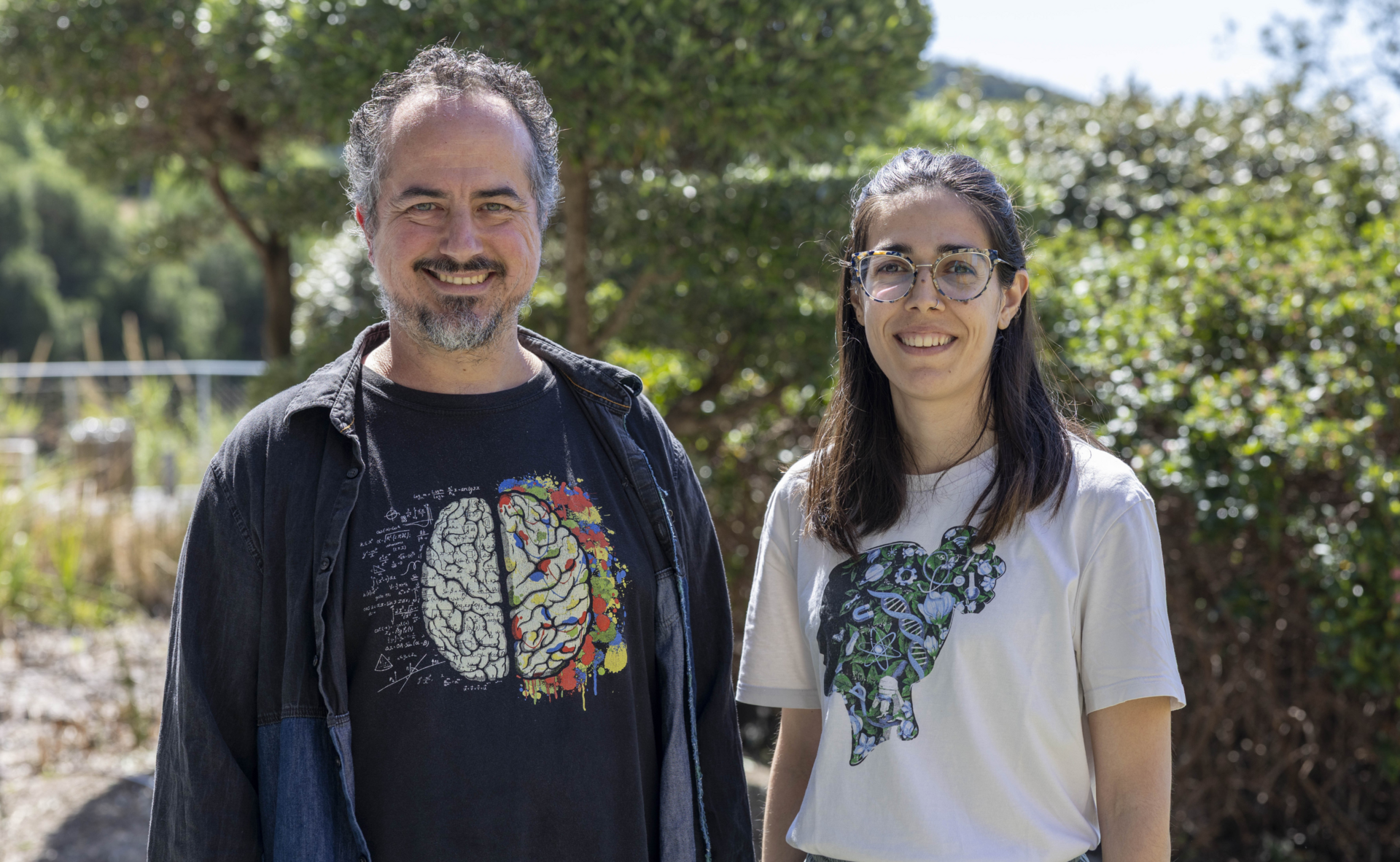
Group leader
- Bernat Gel Moreno
Bernat Gel Moreno
Dr Bernat Gel is a bioinformatician and cancer genomics researcher at the Germans Trias i Pujol Research Institute (IGTP) in Badalona, Barcelona. Trained in computer science and bioinformatics, his work focuses on the application of genomic technologies, computational biology and data analysis to tumour genomics. He has developed his research career within the hereditary cancer and NF1 field, contributing to studies that use next-generation sequencing, copy-number analysis, transcriptomics and integrative bioinformatics to better understand cancer predisposition, tumour evolution and clinically relevant molecular alterations.
His current scientific activity is particularly focused on neurofibromatosis type 1-associated tumours and malignant peripheral nerve sheath tumours (MPNSTs), an aggressive sarcoma that remains difficult to diagnose and treat. His work as group leader of the Translational Cancer Genomics and Bioinformatics Group aims to translate genomics and bioinformatics approaches into practical diagnostic and clinical-support tools that can someday improve cancer detection and patient management.
Contact: bgel(ELIMINAR)@igtp.cat
ORCID: 0000-0001-8878-349X
Team
Postdoctoral fellow
Miriam Magallón Lorenz(ELIMINAR)
Research lines
Tumour genomics and progression of peripheral nerve sheath tumours
This research line, developed in tight collaboration with the Hereditary Cancer Group led by Dr. Eduard Serra, focuses on understanding the genomic, transcriptomic, epigenomic and cellular mechanisms that drive tumour initiation and progression, with a particular emphasis on NF1-associated peripheral nerve sheath tumours and malignant peripheral nerve sheath tumours (MPNSTs). The group uses whole-genome sequencing, RNA sequencing, methylation-based analyses, single-cell and spatial approaches to reconstruct tumour evolution and identify molecular features associated with malignant transformation. A major objective is to define clinically meaningful tumour subtypes, progression routes and biomarkers that can improve diagnosis, risk stratification and future therapeutic development.
Genomics and bioinformatics tools for cancer diagnostics
This line aims to translate genomic knowledge into practical diagnostic-support tools for cancer, starting with MPNSTs as a model disease. The group is developing nanopore sequencing-based diagnostic strategies that exploit the genomic alterations identified through its tumour genomics work, with the goal of helping distinguish benign, premalignant and malignant peripheral nerve sheath tumours in clinically challenging cases. In parallel, the group investigates how broad genomic approaches, such as whole-genome sequencing or other untargeted genomic analyses, compare with the current clinical standard of small disease-specific NGS panels targeting a limited number of genes. This work seeks to determine when broader genomic profiling can provide added diagnostic value and how it can be implemented in realistic clinical workflows.
Liquid biopsy and nanopore sequencing for early cancer detection
This research line explores the use of liquid biopsy for minimally invasive cancer detection, monitoring and risk assessment. The group is particularly interested in early detection of MPNSTs in patients at risk and in the detection of second neoplasms in retinoblastoma survivors. Its distinctive approach is the use of nanopore sequencing to extract multiple layers of information from circulating tumour DNA and other cell-free DNA signals in a single assay. By combining fragmentomics, copy-number analysis and native DNA methylation profiling, nanopore-based liquid biopsy has the potential to provide a richer readout than conventional short-read approaches. The long-term goal is to develop clinically useful strategies for earlier tumour detection and better surveillance of high-risk populations.
Bioinformatics methods and software development
The group develops bioinformatics tools when existing methods are insufficient for its research and translational needs. This includes software for genomic data analysis, visualisation, interpretation and integration, with an emphasis on tools that are robust, reusable and useful to the wider biomedical research community. Previous examples include regioneR and karyoploteR, R/Bioconductor packages for genomic region analysis and genome-wide data visualisation. This line also supports the group's cancer genomics and diagnostics projects by developing tailored pipelines, analysis frameworks and visualisation methods for complex data types, including whole-genome sequencing, single-cell multiomics, nanopore sequencing and liquid biopsy data.
Active projects
Nanopore-based genomic analysis of minimally invasive biopsies of ANNUBP and MPNST for better diagnostics and management
PI: Bernat Gel
Funding agency: Children's Tumor Foundation (CTF)
Agency code: CTF-2023-10-001
Duration: 15/12/2023 - 14/12/2026

Análisis genómico basado en secuenciación por nanoporos de biopsias mínimamente invasivas de annubp y mpnst para un mejor diagnóstico y manejo clínico
PI: Bernat Gel
Funding agency: Fundación Proyecto Neurofibromatosis
Duration: 27/12/2023 - 26/12/2026

Nuevas aproximaciones de genómica traslacional para el diagnóstico y el manejo de tumores malignos de la vaina de los nervios periféricos y otros sarcomes
PI: Bernat Gel
Funding agency: Instituto de Salud Carlos III (ISCIII)
Agency code: PI23/00583
Duration: 1/1//2024 - 31/12/2026

Scientific publications
Highlighted publications
Ortega-Bertran S, Fernández-Rodríguez J, Magallón-Lorenz M, Zhang X, Creus-Bachiller E, Diazgranados AP, Uriarte-Arrazola I, Mazuelas H, Blanco I, Valverde C, Carrió M, Villanueva A, De Raedt T, Romagosa C, Gel B, Salvador H, Ferrer M, Lázaro C, Serra E. Triple Combination of MEK, BET, and CDK Inhibitors Significantly Reduces Human Malignant Peripheral Nerve Sheath Tumors in Mouse Models. Clin Cancer Res. 2025 Mar 3;31(5):907-920. DOI: 10.1158/1078-0432.CCR-24-2807.
Magallón-Lorenz M, Terribas E, Ortega-Bertran S, Creus-Bachiller E, Fernández M, Requena G, Rosas I, Mazuelas H, Uriarte-Arrazola I, Negro A, Lausová T, Castellanos E, Blanco I, DeVries G, Kawashima H, Legius E, Brems H, Mautner V, Kluwe L, Ratner N, Wallace M, Fernández-Rodriguez J, Lázaro C, Fletcher JA, Reuss D, Carrió M, Gel B, Serra E. Deep genomic analysis of malignant peripheral nerve sheath tumor cell lines challenges current malignant peripheral nerve sheath tumor diagnosis. iScience. 2023 Jan 31;26(2):106096. DOI: 10.1016/j.isci.2023.106096.
Magallón-Lorenz M, Fernández-Rodríguez J, Terribas E, Creus-Batchiller E, Romagosa C, Estival A, Perez Sidelnikova D, Salvador H, Villanueva A, Blanco I, Carrió M, Lázaro C, Serra E, Gel B. Chromosomal translocations inactivating CDKN2A support a single path for malignant peripheral nerve sheath tumor initiation. Hum Genet. 2021 Aug;140(8):1241-1252. DOI: 10.1007/s00439-021-02296-x.
Gel B, Serra E. karyoploteR: an R/Bioconductor package to plot customizable genomes displaying arbitrary data. Bioinformatics. 2017 Oct 1;33(19):3088-3090. DOI: 10.1093/bioinformatics/btx346.
Gel B, Díez-Villanueva A, Serra E, Buschbeck M, Peinado MA, Malinverni R. regioneR: an R/Bioconductor package for the association analysis of genomic regions based on permutation tests. Bioinformatics. 2016 Jan 15;32(2):289-91. DOI: 10.1093/bioinformatics/btv562.
Additional information
Collaborative networks
European Neurofibromatosis Group (ENFG)
A network in the European neurofibromatosis and schwannomatosis scene composed by basic, translational and clinical researchers in Europe. The ENFG is responsible for organising the European NF Conference every two years. The group tries to foster a network of collaborative research within Europe. It also organises the ENFG Research Club to foster scientific seminars across European NF research labs.

News
IGTP researchers identify a potential therapeutic strategy for malignant tumours associated with neurofibromatosis type 1
The study, published in Nature Communications, develops a new cellular model that reproduces the progression of NF1-associated tumours and enables the identification of new therapeutic opportunities.
IGTP coordinates a new European COST Action on neurofibromatosis and schwannomatosis
IGTP will coordinate INTERACT-NF, a new European COST Action that will bring together 68 researchers from 13 countries to advance research on neurofibromatosis and schwannomatosis. The network will foster collaboration between researchers, clinicians and patient organisations to address the main challenges associated with these rare diseases.
Contact
(+34) 93 554 30 67