
GCAT joins OMega-X, a European consortium studying the impact of working life on health
How we work, the conditions in which we work and the exposures we experience throughout our working lives can have an important impact on health. To study this relationship from an integrated perspective, OMega-X (European Occupational Exposome Mega Cohort Consortium) brings together population-based and occupational cohorts to investigate the impact of work-related exposures on different health outcomes.
A recently published article in the International Journal of Epidemiology, with Michelle C. Turner, an ISGlobal researcher and coordinator of the European EPHOR project, as first author, and Rafael de Cid, principal investigator of GCAT - Genomes for Life, among its authors, presents the characteristics and potential of OMega-X as a resource for research into occupational health and the exposome.
OMega-X has been established as a long-term resource to facilitate coordinated analyses across cohorts. It currently comprises 24 cohorts from eight European countries and multinational studies, with data from more than 20 million participants. The consortium enables information on employment histories and different occupational exposures to be harmonised and their relationship with diseases and other health indicators to be studied.
GCAT integrates occupational health into exposome research
GCAT contributes to the consortium the perspective of a general population cohort from Catalonia, with information on participants' employment histories and the possibility of linking this with health information and other dimensions of the exposome.
In this way, GCAT makes it possible to go beyond the study of a specific occupational exposure and address a broader question: how do the exposures we experience at work interact with environmental exposures, lifestyle habits, social characteristics and other factors that shape our health throughout life?
The occupational information available in the OMega-X cohorts covers, in many cases, a substantial part of participants' working lives and is combined with different sources of information and exposure assessment systems. Among other factors, the consortium examines exposures related to chemical agents and particles, noise, physical workload, heat, psychosocial factors, precarious employment, infectious agents and ultraviolet radiation.
Rafael de Cid, principal investigator of GCAT and co-author of the study, highlights the importance of incorporating occupational exposures into the broader study of the exposome: "GCAT's participation in OMega-X allows us to give greater weight to a dimension of the exposome that has often been considered separately from other determinants of health: the exposures we experience throughout our working lives. The value of GCAT is that we can study these exposures alongside environmental, social and lifestyle factors and move towards a more integrated view of the determinants of health."
For GCAT, this collaboration also opens the door to a coordinated research strategy with other European cohorts, taking advantage of the scale and diversity of OMega-X to address questions that would be difficult to investigate with the same statistical power in a single cohort.
Analyses carried out within OMega-X have already addressed a range of areas, including cancer, cardiometabolic, musculoskeletal, neurodegenerative and respiratory diseases, as well as mental health disorders and labour market participation.
Natalia Blay, a GCAT researcher, is actively involved in the consortium's different working groups and leads the analyses carried out by the cohort within OMega-X. This work will also contribute to future publications arising from the collaboration: "One of GCAT's major strengths is the ability to connect information from different dimensions of people's lives. Employment histories can be studied alongside environmental and lifestyle data, clinical information and, in certain subgroups, molecular and multi-omics data. Participating in OMega-X will allow us to integrate this information into large-scale studies and contribute to a more comprehensive understanding of the determinants of health across the life course."
New research opportunities
GCAT's participation in OMega-X will strengthen this line of research and enable new questions about the relationship between employment histories and health to be explored. Collaboration with other European cohorts will make it possible to study on a large scale how occupational exposures interact with other determinants of health throughout life.
OMega-X therefore expands the possibilities for studying workers' health from a public health and exposome perspective, integrating the occupational dimension with other environmental, social and lifestyle factors.
Reference
Michelle C Turner, Anjoeka Pronk, Hanifa Bouziri, Ute Bültmann, Daniel Falkstedt, Anne Helene Garde, Henrik A Kolstad, Steinar Krokstad, Taina Leinonen, Karl-Christian Nordby, Vivi Schlünssen, Jenny Selander, Karin Broberg, Rafael de Cid, Lode Godderis, Per Gustavsson, Ane Johannessen, Karen M Oude Hengel, Torben Sigsgaard, Anne Straumfors, Cecilie Svanes, Rachel L Hasting, Svetlana Solovieva, Maria Albin, Jorunn Kirkeleit, Ingrid S Mehlum, Cohort Profile: The European Occupational Exposome Mega Cohort Consortium (OMega-X), International Journal of Epidemiology, Volume 55, Issue 5, October 2026, DOI: 10.1093/ije/dyag151.
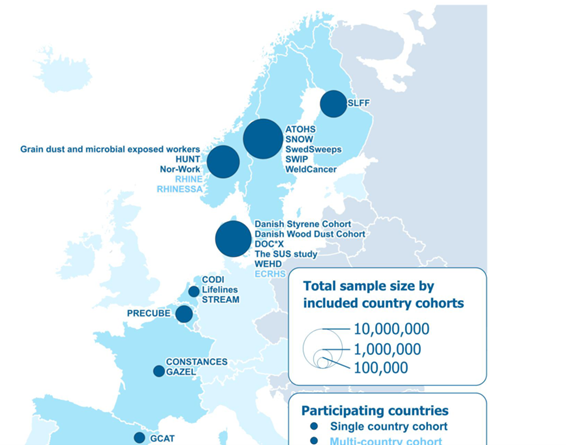
Figure 1. Cohorts included in OMega-X. Source: Turner et al., International Journal of Epidemiology (2026).