
New algorithm improves gene expression marker identification across diverse biological systems
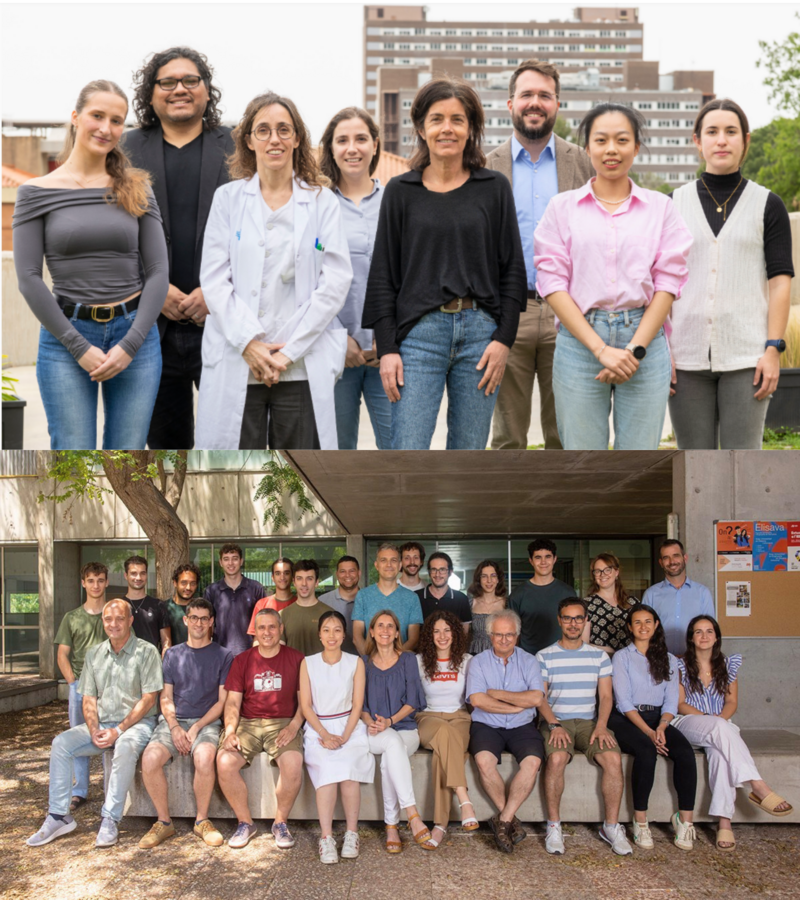
Researchers have developed a new computational approach that enables more accurate selection of the genes that characterise different cellular states from mRNA-seq data, offering a more accurate and interpretable way to analyse complex biological data. The study, published in Frontiers in Immunology, involved researchers from the Germans Trias i Pujol Research Institute (IGTP), Universitat Politècnica de Catalunya (UPC), IrsiCaixa, and the Centro de Investigación Biomédica en Red de Enfermedades Hepáticas y Digestivas (CIBEREHD).
When cells respond to an infection, inflammation or a tumour, the activity of thousands of genes changes, altering their gene expression profiles. Analysing this activity helps researchers understand how cells change state and adapt their function. However, conventional methods may fail to capture the full complexity of these processes, making their molecular characterisation more difficult.
To address this limitation, the research team developed the Cartesian Distance-Based Gene Expression (CDBGE) approach, a novel algorithm designed to identify the genes that best distinguish between different biological conditions.
The method was evaluated using multiple publicly available datasets from human and mouse studies and across different experimental settings, demonstrating its ability to accurately classify samples and identify informative gene expression markers across diverse biological systems.
"Unlike conventional differential gene expression analyses, CDBGE integrates multidimensional and temporal information to better capture the complexity of biological behaviour. This enables researchers to identify both well-established and previously unrecognised biomarkers, providing deeper insights into cellular heterogeneity and dynamic biological processes.", explains Qiaoling Ye, first author of the study and a predoctoral researcher of the Innate Immunity research group at IGTP and the Physics Department, Institute for Research and Innovation in Health (IRIS), at UPC.
"The method enhances the accuracy of gene selection, leading to improved biological classification, while maintaining a simple, flexible and interpretable framework that can be applied to a wide range of experimental designs", she adds.
CDBGE is based on a method originally developed to select genes differentially expressed across distinct in vitro-generated human macrophage phenotypes (Sanjurjo et al. Frontiers in Immunology, 2018). By combining robustness, flexibility and interpretability, the approach represents a valuable new tool that could facilitate biomarker discovery and improve our understanding of complex biological mechanisms.
Reference
Ye Q, Macedo R, Martinez-Verbo L, Plekaviciute V, Vazquez Navarro J, Garcia E, Pagès-Oliveras J, Lozano JJ, Cabrera C, Perramon-Malavez A, López D, Prats C, Sarrias MR. A versatile distance-based approach for gene expression selection across diverse biological systems. Front Immunol. 2026;17:1843796. DOI: 10.3389/fimmu.2026.1843796.