
La Marató visits return to the IGTP laboratories to bring science closer to the public
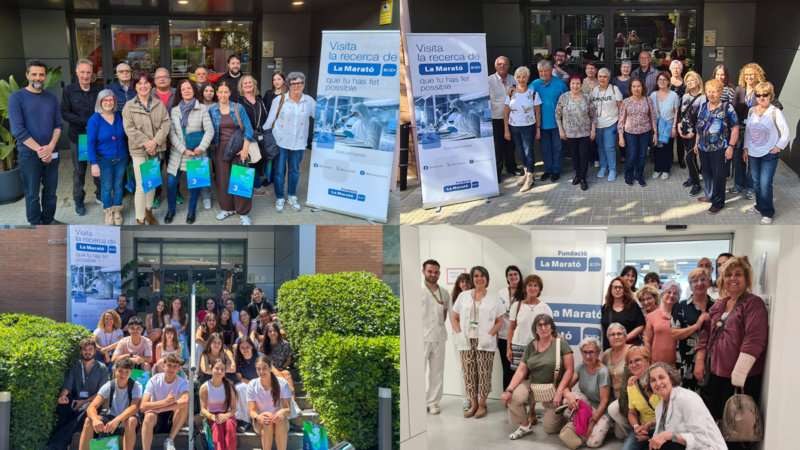
Once again, Germans Trias i Pujol Research Institute (IGTP) has opened its laboratories to the public as part of the 'Visita la recerca' program promoted by La Marató de 3Cat. These sessions, open to the public and free of charge, aim to showcase first-hand the research projects funded thanks to donations from La Marató.
IGTP has hosted four visits over the past few months, with the participation of more than fifty people, who have had the opportunity to explore the biomedical research carried out at the institute through talks, workshops, and guided tours of the laboratories and facilities.
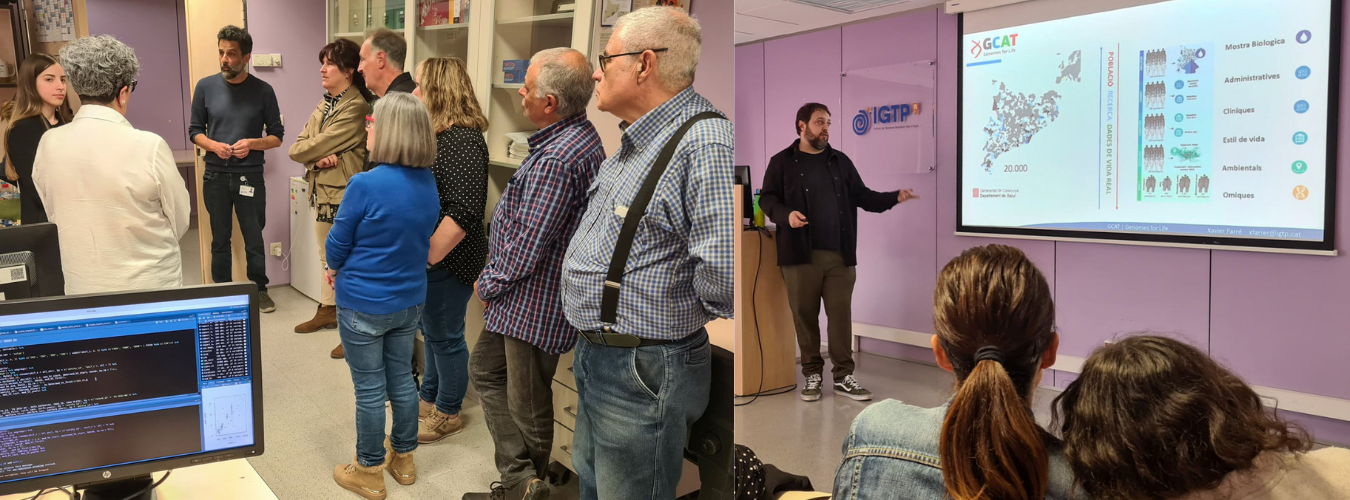
25 March - Study of the genomic regions defined in relation to COVID: deciphering the link between chrononutrition and cardiometabolic disorders from an epigenetic perspective
The first visit introduced the COVICAT cohort, a sub-cohort of the project GCAT'Genomes for Life, created specifically to study the impact of the pandemic. Concepts such as population cohort were explored in depth, and it was explained how this has enabled the rapid and efficient analysis of COVID-19 and long COVID, integrating omics data with clinical, occupational, and environmental exposure information, in collaboration with multiple research groups and with the direct contribution of the volunteers who are part of it. Rafa de Cid and Xavier Farré, members of the GCAT team, guided the visit.
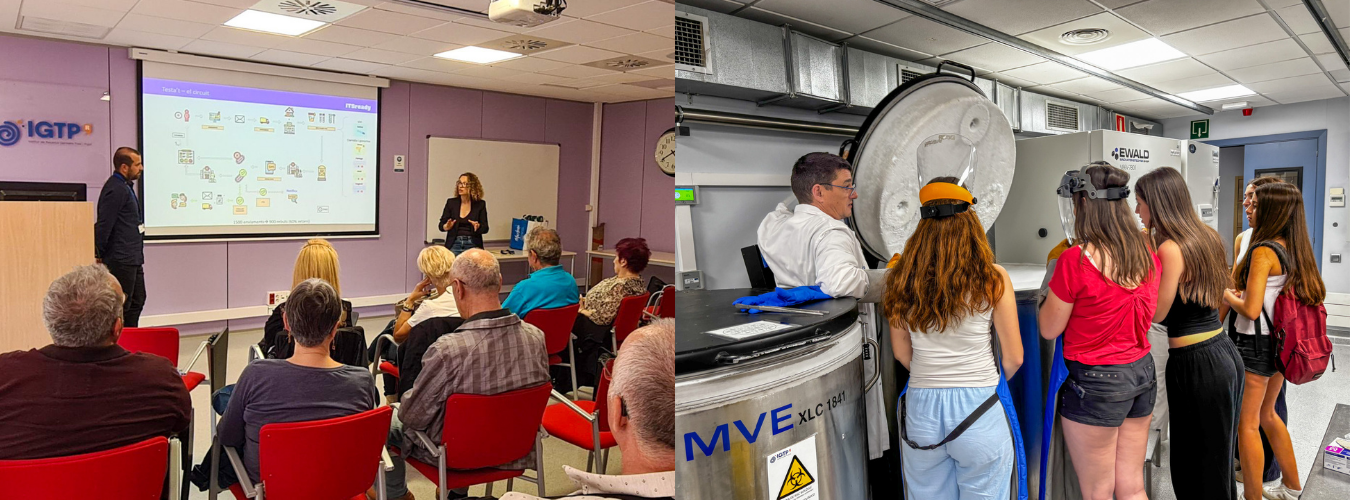
30 April & 3 June - New approach to deepen young people's sexual health: screening, information and notification to partner contacts
These two sessions were dedicated to presenting the TESTA'T-iCONNECTA-Joves project, promoted by the Centre for Epidemiological Studies on HIV/AIDS and STI of Catalonia (CEEISCAT) which provides tools for young people to gain better knowledge and more autonomous management of their sexual health through accessible screening, reliable information, and secure notification systems. The project, presented by Cristina Agustí, Hernán Perea and Andreu Colom, adopts a gender-sensitive, intersectional, and stigma-free approach, promoting autonomy, confidentiality, and respect.
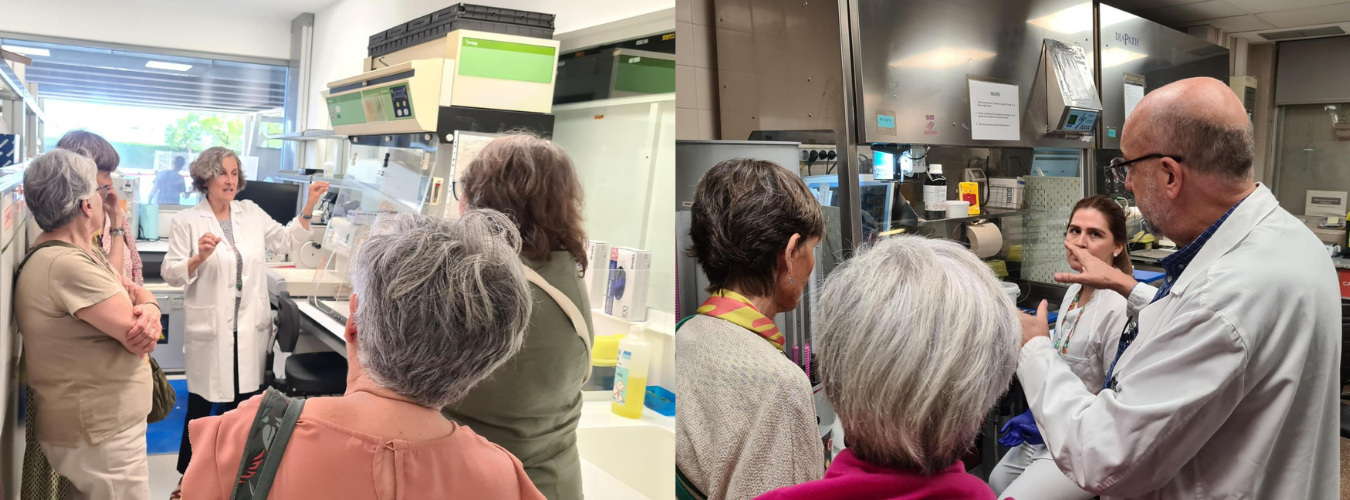
11 June - Deciphering the progression of ductal carcinoma in situ to avoid overtreatment of patients and improve the impact on sexual and reproductive health
On this occasion, visitors were able to learn about a project aimed at identifying biomarkers that can predict which patients with in situ breast cancer would not require preventive treatment, with the goal of avoiding possible adverse effects on their sexual health. The project is led by Aintzane Urbizu in collaboration with the Vall d'Hebron Hospital and the Institut de Recerca i Innovació en Ciències de la Vida i de la Salut a la Catalunya Central (IRIS-CC). The processing and analysis of the samples are carried out at the Pathology Service of the Germans Trias i Pujol Hospital (HUGTiP), whose facilities attendees were able to visit during the activity, accompanied by the head of department, Pedro L. Fernández.
These visits constitute a unique opportunity to directly connect advances in biomedical research with the public and to create a space for outreach, dialogue, and return to society, thanks to a leading solidarity initiative in Catalonia.