
A study led by IGTP identifies a key mechanism regulating the anti-inflammatory function of extracellular vesicles
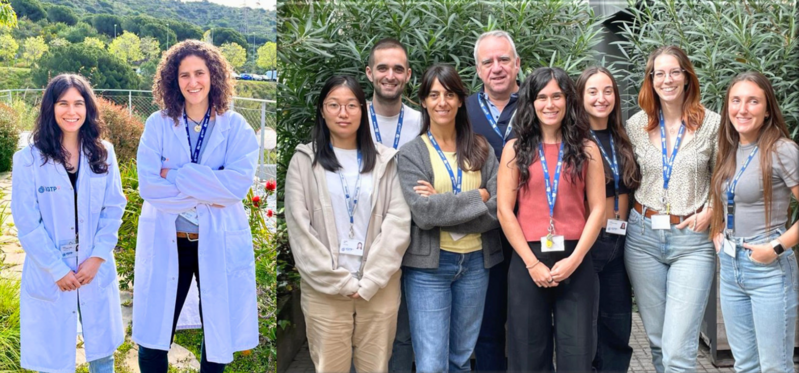
A study led by the Innovation in Vesicles and Cells for Application in Therapy (IVECAT) group at the Germans Trias i Pujol Research Institute (IGTP) has identified a key mechanism regulating the anti-inflammatory function of extracellular vesicles derived from mesenchymal stromal cells. The findings, published in the Journal of Extracellular Vesicles, provide new insights into the therapeutic potential of these vesicles in inflammatory diseases and ischaemic processes.
Extracellular vesicles derived from mesenchymal stromal cells are attracting considerable interest due to their potential applications in nanomedicine, the treatment of inflammatory diseases and tissue regeneration. One possible therapeutic application, for example, would be the intravenous administration of these vesicles to reduce the endothelial inflammation that occurs in blood vessels following ischaemia.
The researchers demonstrated that N-glycosylation, a modification consisting of sugar chains present on the surface of proteins and lipids, is essential for preserving their immunomodulatory function. Specifically, the results show that vesicles with intact N-glycosylation can reduce the recruitment of monocytes to inflamed endothelium, a process mediated, at least in part, through the MCP-1/CCR2 axis. These findings contribute to a better understanding of the mechanisms of action of mesenchymal stromal cell-derived extracellular vesicles and open the door to future bioengineering strategies aimed at improving their targeting and immunomodulatory capacity in inflammatory and ischaemic settings.
To better understand how these vesicles interact with the endothelium and modulate the inflammatory response, the researchers developed an experimental flow model in the laboratory that simulates blood flow conditions. Using this in vitro model under dynamic flow conditions, they were able to study the interaction between extracellular vesicles, inflamed endothelium and monocytes -the cell type that first responds to inflammation and helps determine its outcome- in an environment that more closely resembles physiological vascular conditions.
"Flow experiments have been key to gaining a better understanding of how extracellular vesicles interact with inflamed endothelium in a setting that more closely reflects what happens inside blood vessels. This approach has allowed us to observe not only vesicle uptake, but also their functional impact on monocyte recruitment", highlights Dr Marta Clos-Sansalvador, co-first author of the study.
"Processes such as monocyte rolling and adhesion to the endothelium under flow conditions, which are necessary steps for extravasation, could not have been studied using conventional static models", adds Dr Marta Monguió-Tortajada, the other co-first author of the study. "Thanks to this approach, we have shown how vesicles can reduce monocyte extravasation across inflamed endothelium, helping to explain one of the mechanisms through which inflammation is reduced".
"The study highlights that the surface characteristics of extracellular vesicles, such as glycosylation, are critical determinants of their biological function. Understanding these mechanisms is essential for advancing the design of extracellular vesicles with more precise cellular targeting and, potentially, greater therapeutic efficacy", says Dr Clos-Sansalvador.
This study was made possible through collaboration between researchers from the IVECAT group, the group led by Dr Héctor Peinado and the microscopy team at the CNIO. The work also received support from mobility grants awarded by the Spanish Group for Research and Innovation in Extracellular Vesicles (GEIVEX), which facilitated access to advanced technologies and specialised expertise.
The study, entitled Surface N-Glycosylation Dictates MSC-EV Uptake and CCR2-Driven Monocyte Recruitment to Inflamed Endothelium Under Shear Flow, was led by the IVECAT group at IGTP, headed by Dr Francesc E. Borràs. The co-first authors are Marta Clos-Sansalvador and Marta Monguió-Tortajada.
Reference
Clos-Sansalvador M, Monguió-Tortajada M, Garcia SG, Pérez-Martínez M, Sanroque-Muñoz M, Font-Morón M, Megías D, Peset I, Franquesa M, Hergueta-Redondo M, Peinado H, Borràs FE. Surface N-Glycosylation Dictates MSC-EV Uptake and CCR2-Driven Monocyte Recruitment to Inflamed Endothelium Under Shear Flow. J Extracell Vesicles. 2026 Jun;15(6):e70316. DOI: 10.1002/jev2.70316.