
AI-based voice assistant shows good usability for remote monitoring of patients affected by the digital divide
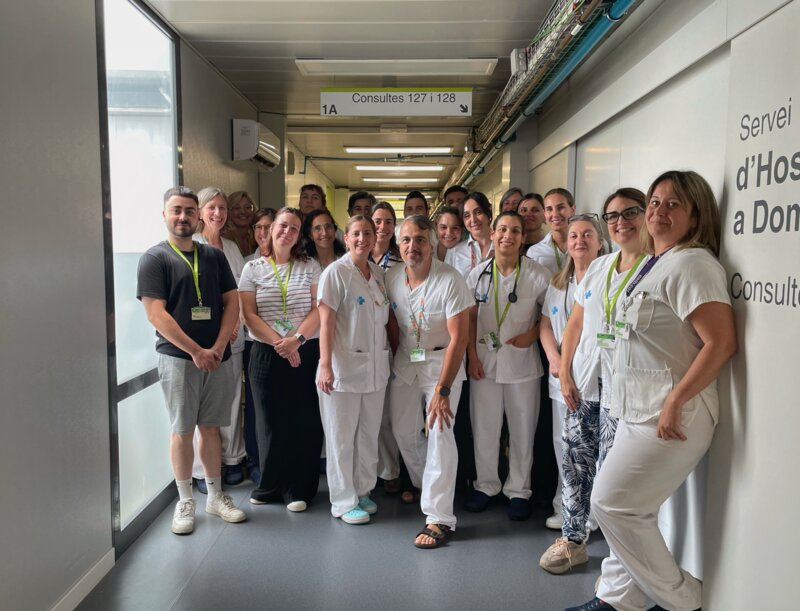
A team from the Germans Trias i Pujol Research Institute (IGTP), in collaboration with the Home Hospitalisation Service (HAD) of the Germans Trias i Pujol University Hospital and the technology company Doole Health, has evaluated the usability of an artificial intelligence-based voice assistant for the remote clinical monitoring of patients. The results show good acceptance among both healthcare professionals and patients, including individuals with limited access to or use of digital technologies.
The study was carried out within the framework of the CUIDA+ project, an initiative aimed at facilitating access to telemedicine for groups affected by the digital divide, particularly older adults and people with disabilities. The work was co-led by the Health Innovation, Health Economics and Digital Transformation Research Group (INEDIT) at IGTP and Doole Health.
"Our goal is to ensure that all patients can benefit from remote monitoring, regardless of their level of digital literacy or access to technological devices," explains Dr Meritxell Davins, principal investigator of the study and member of the INEDIT research group.
The voice assistant enables the remote monitoring of patients through conventional telephone calls. During these calls, the system asks questions based on the standard protocols used by the Home Hospitalisation Service and converts patients' spoken responses into structured clinical information. The tool can be configured in both Catalan and Spanish, adapting to users' language preferences.
Despite growing interest in artificial intelligence-based conversational assistants in healthcare, evidence regarding their usability and acceptance in real-world clinical settings remains limited. For this reason, the study focused on evaluating user experience and satisfaction.
The evaluation was carried out in three consecutive phases. The first involved the Digital Transformation and Digital Health team at Germans Trias Hospital. The tool was then assessed by 18 professionals from the Home Hospitalisation Service and, finally, by a group of 19 patients, 47% of whom were affected by the digital divide. Feedback collected during each phase enabled progressive improvements to be made before moving on to the next stage of evaluation.
The results obtained during this usability phase reinforce the potential of this type of tool to support the remote monitoring of patients. The next step will be to conduct a clinical evaluation and assess its potential implementation in real-world healthcare settings, particularly among populations with difficulties accessing digital technologies.
Project funded by the European Union - NextGenerationEU under the Recovery, Transformation and Resilience Plan (PRTR), with the support of the Government of Catalonia - Department of Business and Labour.
