
‘INTEGRA-DM1’, a comprehensive study of Myotonic Dystrophy type 1 to identify new biomarkers and advance precision medicine
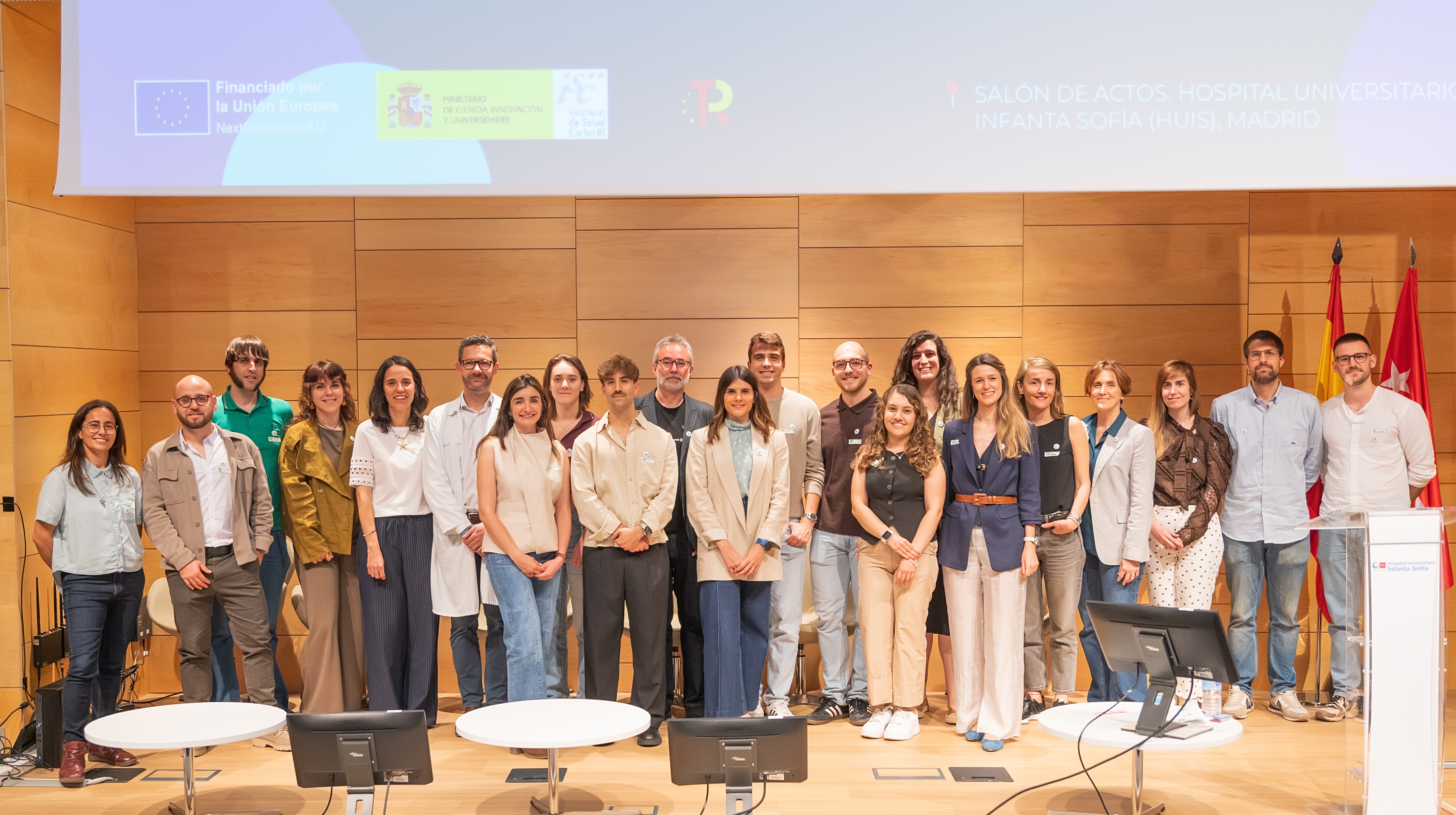
- The multicentre project, led by INCLIVA with the participation of IGTP and IIS La Fe, has received funding from the Fundación Ramón Areces' PINERA Rare Diseases Research Program
- DM1 is a rare and highly heterogeneous neuromuscular disease, making these biomarkers particularly important for establishing effective prevention criteria
- INTEGRA-DM1 builds on research conducted by INCLIVA and IGTP within DM1-Hub, Spain's first clinical registry for DM1
The 'INTEGRA-DM1' project, led by the INCLIVA Biomedical Research Institute at the Hospital Clínico Universitario de València, with the participation of the Germans Trias i Pujol Research Institute (IGTP) in Badalona and the Health Research Institute Hospital La Fe in València, has received one of the two grants awarded in the second edition of the Fundación Ramón Areces' PINERA Rare Diseases Research Program.
'INTEGRA-DM1', which was selected in the Multicentre Research Project category, will be coordinated by Dr Arturo López Castel, a researcher in INCLIVA's Human Translational Genomics Research Group, and aims to identify biomarkers for the prevention and treatment of Myotonic Dystrophy type 1 (DM1).
DM1 is a rare genetic neuromuscular disease that affects 1 in 10,000 people worldwide. Its clinical manifestations are highly heterogeneous, and it can affect numerous organs and functions, including muscular, respiratory, cardiac, gastrointestinal and cognitive functions. This can reduce patients' quality of life and life expectancy. Although the condition is more prevalent in adults, it also has paediatric clinical forms. Currently, only palliative treatments are available to reduce the impact of some of its symptoms.
Dr Arturo López Castel's team will work on integrating transcriptomic, metabolomic and microbiome data to identify new biomarkers for the disease. "Patients with this condition present complex molecular heterogeneity and multisystem clinical manifestations that are only partially understood, leading to significant delays in diagnosis, inefficient monitoring and considerable difficulties in obtaining approval for an effective treatment. In this context, the discovery of new biomarkers in DM1 is crucial to establishing effective prevention criteria and enabling personalised medicine approaches for patients", explains the researcher.
The 36-month project will bring together scientists from different fields to conduct a study that will, for the first time, provide a comprehensive approach to the disease. "The main objective of the project is to identify dynamic biomarkers that are relevant during disease progression", says López Castel. He adds that this will be possible through the use of cutting-edge omics technologies, which will enable detailed comparisons of transcriptomic and metabolomic profiles and the microbiome between patients, as well as with healthy individuals, for the first time in this disease. The project will also enable a second level of analysis by integrating genetic, proteomic and clinical data being generated through Spain's first DM1 clinical registry (DM1-Hub), also led by the INCLIVA and IGTP groups.
The project will be carried out through close collaboration between the INCLIVA and IGTP teams within the framework of DM1-Hub, coordinated by Dr Gisela Nogales, leader of the Badalona Neuromuscular Research Group (GRENBA). DM1-Hub is Spain's first clinical registry for DM1, and this collaboration will make it possible to combine large-scale molecular and clinical data to advance the identification of new biomarkers and improve understanding of the disease.
The Fundación Ramón Areces' PINERA Program
"Through the PINERA Program, the Fundación Ramón Areces is reinforcing its longstanding commitment to improving the diagnosis and treatment of conditions that affect more than 300 million people worldwide, around 30 million in Europe and nearly three million in Spain", explains Emilio Bouza, President of the Foundation's Scientific Council. Rare diseases represent one of the major public health challenges worldwide. Although each individual disease affects fewer than five in every 10,000 people, an estimated 7,000 different rare diseases exist. Around 80% are genetic in origin and 70% manifest during childhood. "However, the vast majority -around 95%- still have no specific treatment, highlighting the need to promote research, accelerate early diagnosis and ensure equitable access to healthcare and innovative therapies", adds Dr Bouza.
The other project selected in the second edition of the PINERA Program, in the Structural Funding category, which supports the acquisition, installation and commissioning of scientific and technical equipment, is 'CebraÚNICA: Automation of drug screening for personalised therapies in rare diseases'. Led by Dr María Luisa Cayuela Fuentes at the Instituto Murciano de Investigación Biosanitaria (IMIB-FFIS), the project proposes a permanent structural platform designed to accelerate functional diagnosis and the search for personalised therapies for rare diseases.