
The CARE Annual Meeting reviews the program’s cancer research activity and sets priorities for the months ahead
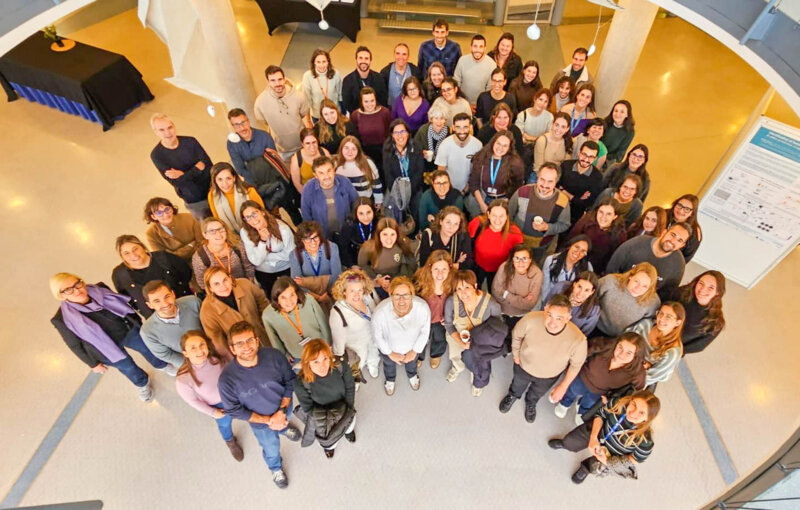
The III CARE Annual Meeting, held yesterday at the Badalona Centre Internacional de Negocis (BCIN), brought together the cancer research community of the Can Ruti Campus for a day focused on scientific dialogue, interdisciplinarity and future strategy.
The Translational Program in Cancer Research (CARE) is an initiative led by the Germans Trias i Pujol Research Institute (IGTP) within the framework of its accreditation as an Instituto de Investigación Sanitaria, in collaboration with Germans Trias i Pujol University Hospital, Institut Català d'Oncologia, Josep Carreras Leukaemia Research Institute, IrsiCaixa, and Universitat Autònoma de Barcelona. Since 2022, it has established itself as a highly valuable strategic structure to coordinate efforts, share resources and drive joint projects in the field of oncology.
This year's annual meeting included a scientific session at BCIN, as well as a Flash Talks session held the previous day at IGTP, which gave several early-career researchers the opportunity to present their ongoing work.
An afternoon of scientific exchange
The 4 December program was structured around several talks and debates throughout the afternoon, preceded by a lunchtime networking space and poster presentations.
The introductory block was led by the CARE directors, Mireia Margelí and Miguel Ángel Peinado, who opened the event and reviewed the program's activity during 2025. During his remarks, Peinado announced that he would be stepping down as director and wished every success to his successor, Eduard Serra. Afterwards, Mireia Jordà outlined the sample circuits at Can Ruti and the collaborative activity between CARE's technical nodes, while Ricard Mesía discussed the ongoing process for Can Ruti to become, together with the Josep Trueta, a Comprehensive Cancer Centre for Catalonia. Finally, Eva Martínez-Balibrea highlighted the work of the Colorectal Cancer Task Force, one of the program's multidisciplinary networks.
The next session, moderated by Cristina Carrato and Mireia Margelí, focused on the key role of pathology in translational research at the Can Ruti Campus. Cristina Carrato (lymphoid pathology), Gustavo Tapia (neuropathies), and Laura Pons (breast pathology) each presented their projects and research lines.

The meeting featured poster presentations, talks, and debates.
The following block, titled "The many faces of research within CARE" and moderated by Eduard Serra, offered three complementary perspectives on professional development at the Can Ruti Campus and within the CARE framework. Oskar Marín Béjar described his path as a basic researcher; Núria Mulet provided the viewpoint of medical oncology; and Sofía España outlined her experience as a clinical researcher.
The final block gave a voice to the different groups that form part of CARE, through three parallel debates: on the situation of PhD candidates and postdocs, coordinated by Arola Fortian; on early-career and associate researchers, coordinated by Anna Martínez-Cardús; and on senior researchers in the clinical and basic fields, coordinated by Mireia Margelí, Miguel Ángel Peinado, and Eduard Serra.
Building the future of cancer research at Can Ruti
The meeting concluded with the presentation of each debate group's key points and with the award for the best poster. The winner was Sara Cabrero, who will receive funded registration to attend a scientific conference, worth approximately €500.

The early-career researchers who presented their posters.

The prize winner together with members of the jury.
As underlined during the closing remarks, the scientific community of the CARE program continues to grow and consolidate itself as a reference space that drives cancer research and fosters collective work, with a direct impact on the quality of studies. The program's various nodes and cross-cutting multidisciplinary networks will continue to promote training, exchange, and progress for all participating researchers, with the ultimate goal of improving cancer prevention, diagnosis, and treatment for patients.

The organising committee.